American Retirees in France: Complete Guide to Living in Paris (Visa, Cost, Taxes)
Living in France may have been a dream of yours for years — and now that you’re happily retired, what are you still waiting for? There’s no better time to take a step away from the U.S. and start a new chapter abroad.
Think of it less as “retirement” and more as an experience: a year or two spent fully immersed in France’s rich culture, world-renowned cuisine, and uniquely romantic lifestyle.
But here’s the reality: between visas, housing, healthcare, taxes, and administrative paperwork, the process can quickly feel overwhelming if you don’t understand how everything fits together in France.
This Paris relocation guide for Americans breaks it all down — clearly and practically — based on real experience helping retired U.S. expats successfully move to France and settle into life in Paris.
The Reality First — You Need to Rent an Apartment in Paris Before Your Visa
This is where many Americans run into trouble when planning to move to France.
If you’re applying for the French long-stay visitor visa (VLS-TS Visiteur), one of the key requirements is proving that you already have a place to live.
Proof of Accommodation for a France Visa
In practical terms, this means providing a signed lease in France to prove that you have already secured a long-term rental.
And no — unfortunately, a short-term Airbnb booking won’t qualify for your France visa application.
Why Renting in France Is So Difficult for Americans
Here’s the catch (and it surprises a lot of people):
- You need a French address to get your visa
- But most landlords in France want tenants who are already settled and have secured their visa
For retired Americans moving to France, it gets even more complicated:
- No French income
- No French guarantor
- No local credit history
So you’re stuck in a bit of a loop.
This is exactly why working with an agency that specializes in expat rentals in Paris, such as Paris Rental, can make all the difference.
We regularly help American retirees secure long-term rentals in Paris — even before they arrive — so they can meet visa requirements and move forward with confidence.
Best Visa for Retired Americans Moving to France
For most U.S. retirees planning to live in France long-term, the most suitable option is the:
French Long-Stay Visitor Visa (VLS-TS Visiteur)
This visa is specifically designed for non-EU citizens who want to stay in France for more than 90 days without working.
It’s ideal if you:
- Want to retire in France or spend extended time in Paris
- Do not plan to work or run a business in France
- Have sufficient financial resources to support yourself
France Retirement Visa Requirements
To obtain a French long-stay VLS visa, the administration will typically require:
- Proof of sufficient income (generally €1,500–€3,000/month minimum, though higher income strengthens your application)
- Private health insurance valid in France
- Proof of accommodation in France (such as a long-term rental)
- A signed statement confirming you will not work in France
This visa is valid for one year and renewable, making it a practical and flexible option if you’re planning to retire in France or enjoy a 1–2 year stay in Paris.
👉 Important: Once you arrive in France, you must validate your visa online within the first 3 months to activate your residency status.
Renting Property in France as an American Retiree
Let’s talk about one of the most important — and often most stressful — steps when planning to move to France: finding the right housing.
Understanding the French Rental System for Expats
The French rental system is known for being paperwork-heavy. Landlords typically expect a complete application file (“dossier”), including:
- Valid ID or a passport
- A valid visa
- Proof of income or financial resources (e.g., pension statements, statements from IRAs or 401(k) accounts)
- Recent tax documents
- Bank statements
- Proof of U.S. residency (e.g., utility bill, property tax, or other official document showing your address)
-
A French guarantor (“garant”) or rental guarantee
For most expats, finding a French guarantor can be difficult, since landlords typically require someone based in France with local income. In this case, services like Garantme offer a reliable solution by acting as your guarantor and significantly increasing your chances of getting approved for a rental in France.
Even financially comfortable retirees can run into difficulties — not because of their income, but because they don’t fit the traditional French tenant profile.
What Helps American Retirees Get Approved
If you’re a high-income retiree, you actually have several advantages when renting in France. In fact, many French landlords prefer retiree expats over local French tenants for several key reasons:
- Stable and reliable income (pensions, retirement funds, or investments)
- Ability to pay several months of rent upfront, which reassures landlords
- Fixed lease duration, offering greater predictability
- Eligibility for a Code Civil lease (secondary residence lease), which is often preferred by French landlords due to its flexibility
- Strong tenant profile, with retirees typically taking excellent care of the property (no parties, minimal noise)
Positioning your application to highlight these strengths can make a significant difference in getting approved.
At Paris Rental, we work with expat retirees every day and know exactly how to present your application to stand out and win over landlords.
What to Choose: Furnished or Unfurnished Rentals in Paris
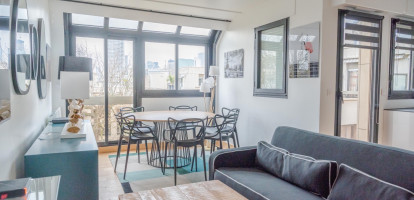
For a 1–2 year stay, most Americans moving to Paris choose furnished rentals (“meublé”) because they offer:
- A much easier move-in process
- More flexible lease terms (typically one year, with the possibility of negotiating a shorter duration under a Code Civil lease)
- No need to purchase or transport furniture
- Fully equipped apartments (kitchenware, appliances, linens), allowing you to settle in immediately
This makes furnished apartments the most practical option for retirees planning a temporary or flexible stay in France.
Best Areas to Live in Paris and France for Retirees
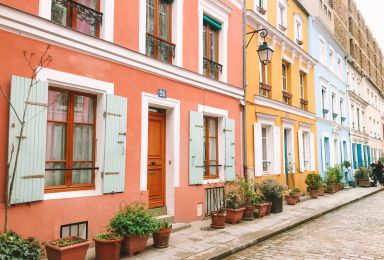
Paris is a big city, made up of 20 different districts and many nearby suburbs. Without a bit of guidance, it’s easy to feel confused about where to start.
Best Neighborhoods in Paris for American Retirees
Saint-Germain-des-Prés (6th arrondissement, Left Bank)
If you’ve ever pictured yourself sitting at Café de Flore or Les Deux Magots, this is the neighborhood you’re thinking of. Saint-Germain-des-Prés has that classy, chic Paris feel — charming streets, art galleries, and the Luxembourg Gardens just a short walk away.
👉 Think a mix of the West Village and the Upper East Side — historic, elegant, walkable, and full of character.
It’s perfect for a first stay in Paris when you want that iconic, postcard Parisian experience.
7th arrondissement (Eiffel Tower area, Left Bank)
This is where the Eiffel Tower is — so yes, it’s as special as it sounds. You’re close to the Seine, near the Musée d’Orsay, and just steps from Rue Cler, one of the best market streets in Paris. It’s quiet, polished, and feels very safe.
👉 Think Upper East Side meets a quieter part of Georgetown in D.C. — residential, upscale, and close to major landmarks.
Ideal if you want a peaceful, refined lifestyle with iconic views right outside your door.
Le Marais (3rd & 4th arrondissements, Right Bank)
Le Marais is lively, trendy, and full of personality. You’ll be near Place des Vosges, the Picasso Museum, and some of the best shopping, dining, and nightlife in Paris. It’s also the heart of Paris’s LGBTQ+ community.
👉 Think SoHo meets the Lower East Side — historic buildings, boutiques, great food, and a vibrant social scene.
It’s a great fit if you love being out, exploring, and having energy all around you.
16th arrondissement (Right Bank)
The 16th district feels more residential and spacious, almost like a calm, upscale bubble within the city. You’re close to the Bois de Boulogne (perfect for walking, biking, or even boating) and near Trocadéro for amazing Eiffel Tower views.
👉 Think Upper East Side or parts of Brooklyn Heights — quiet, elegant, family-oriented, and more relaxed.
Perfect if you want space, comfort, and a slower, more peaceful daily rhythm.
Best Places to Live in France Outside Paris
Many retirees start in Paris, then explore other regions for a different pace of life in France:
- Bordeaux – Famous for wine, elegant architecture, and a slower, more relaxed lifestyle
- Nice (French Riviera) – Mediterranean climate, sea views, and a laid-back coastal lifestyle
- Aix-en-Provence – Sunny, charming, and culturally rich with a strong local identity
Cost of Living in France for American Retirees
Let’s start with a common misconception: living in France isn’t necessarily more expensive than the U.S. In fact, many American retirees find they get a higher quality of life for a similar — or even lower — budget.
Monthly Cost of Living in Paris for Retirees
For a comfortable lifestyle in Paris, here’s a realistic monthly budget:
- Rent: €2,000–€5,000 (prime Paris neighborhoods)
- Groceries: ~€800–€1,000 per month (often lower than in the U.S., especially for fresh, local products)
- Dining out: ~€15–€25 for a typical lunch, €30–€60 for dinner depending on the restaurant — generally more affordable than comparable meals in cities like New York or San Francisco. Plus, there’s no tipping culture in France, as service is already included in the price.
- Transportation: ~€84–€90 per month for a Navigo pass (unlimited public transit across Paris). Occasional Uber rides range from €10–€25 per trip, so an additional €50–€150 monthly budget comfortably covers convenience trips.
- Electricity & Internet: ~€80–€150 per month, depending on the apartment size and usage
- Home insurance (required in France): ~€15–€30 per month
- Leisure & activities: ~€200–€600 per month (museums, concerts, classes, short trips, etc.)
👉 Estimated total monthly budget:
~€3,200 to €7,000+ per month, depending on your lifestyle and housing choice
Healthcare in France for American Retirees
Access to high-quality, affordable healthcare is one of the main reasons many Americans choose to retire in France.
Step 1 — Private Health Insurance for Your France Visa
When applying for a French long-stay visa, you’ll need to show proof of private health insurance that is valid in France.
This can be:
- An international health insurance plan
- Or a French private insurance policy
Your coverage must meet visa requirements, including comprehensive medical coverage during your initial stay, with a minimum coverage of around €30,000 in healthcare costs.
Step 2 — Access to French Public Healthcare (PUMA)
After a few months of legal residency in France, you may become eligible for the French public healthcare system, known as PUMA (Protection Universelle Maladie).
To qualify, you generally need to reside in France on a stable and regular basis for at least 3 months and have legal residency status.
The French public healthcare system (PUMA) gives you access to:
- Public healthcare coverage across France
- Partial reimbursement for doctor visits, hospital care, and prescriptions (e.g., ~70% of a €25 doctor visit, ~80% of hospital costs, and 15%–65% for most medications)
Documents Required to Apply for French Social Security
To register for PUMA, you will typically need to provide:
- Notarized copy of your birth certificate (translated by a certified translator if not in French)
- Copy of your passport
- Valid visa and proof of residence permit (or VLS-TS validation)
- Proof of address in France (rental agreement or utility bills)
- French bank account details (IBAN)
Most expats also choose to add a mutuelle (top-up insurance) to cover the remaining out-of-pocket costs. Depending on your age and level of coverage, a top-up health insurance in France typically costs around €50 to €150 per month, and can significantly reduce — or even eliminate — most healthcare expenses.
Why Healthcare in France Is a Major Advantage
France consistently ranks among the best healthcare systems in the world — and for retirees, the benefits are clear:
- High-quality medical care
- Easy access to doctors and specialists
- Significantly lower costs compared to the U.S.
For many American retirees, healthcare alone is a game changer — making life in France not just appealing, but genuinely practical and financially sustainable.
Taxes for Americans Living in France (Short-Term Stay)
Taxes are often the most confusing part of planning a move to France as an American — but with the right setup, they’re usually very manageable.
Do Americans Pay Taxes in France?
For a 1–2 year stay, the key question is whether you become a French tax resident.
👉 In general, you are considered a French tax resident if:
- You spend more than 183 days per year in France, or
- France is your primary residence (main place of living)
If neither applies, you typically remain a U.S. tax resident only.
Key Tax Rules for U.S. Expats in France
If you are NOT a French tax resident:
- You continue to pay taxes only in the U.S.
- France generally does not tax your foreign income
- If you rent an apartment as a secondary residence, you may be subject to council tax on second homes (taxe d’habitation sur les résidences secondaires)
This is often the case for shorter or more temporary stays.
If you DO become a French tax resident:
- You must declare your worldwide income in France
- You still need to file U.S. taxes (as all U.S. citizens do): file Form 1040 annually, report foreign accounts over $10,000 (FBAR), and potentially file Form 8938 if your assets exceed higher thresholds (~$200,000+)
- The U.S.–France tax treaty helps prevent double taxation
👉 In practice:
France taxes your worldwide income, but the treaty determines which country has the primary right to tax each type of income.
- U.S. Social Security is typically taxed only in the U.S.
- Pensions and investment income may be taxed in one country, with tax credits applied in the other
- In most cases, you won’t pay tax twice on the same income
How to Open a Bank Account in France as an American
Opening a French bank account can make your day-to-day life much easier — but it’s not always strictly required.
Do You Need a French Bank Account to Live in France?
Technically, you don’t always need a French bank account as a foreigner living in France. You can often pay rent, utilities, and daily expenses using a U.S. account or international card.
However, in practice, having a French bank account is highly recommended — especially if you’re staying for several months:
- Many landlords prefer a French IBAN for rent payments, rather than receiving international transfers each month
- Utilities, insurance, and subscriptions are much easier to set up with a French bank account
- You avoid foreign transaction fees and currency exchange costs
- It simplifies administrative processes (including healthcare reimbursements and tax refunds)
How to Open a Bank Account in France
As an American, opening a bank account in France is possible, but it can involve a bit more paperwork due to U.S. regulations (FATCA).
You’ll typically need:
- Passport
- Valid visa or residence permit
- Proof of address in France (rental contract or utility bill)
- Proof of income or financial resources
- Sometimes a French phone number
👉 Many traditional banks may be selective with U.S. clients, so expat-friendly or international options — such as BNP Paribas, HSBC France, Crédit Agricole, CIC, or Crédit Mutuel — can make the process easier.
Alternative Options
If you want a quicker solution, many expats start with:
- Online banks (like Wise or Revolut)
- International accounts that provide a European IBAN
These can be a convenient first step while setting up a traditional French account.
Do You Need to Speak French to Live in Paris?
One of the biggest concerns for Americans considering a move to France is the language barrier. The good news? You don’t need to be fluent in French to live in Paris — but knowing some basics will make your life much easier.
The Reality: Paris vs. Smaller Cities
In Paris, many people — especially in central neighborhoods — speak at least some English. You’ll generally be able to manage daily life, including ordering at restaurants, shopping, and using public transportation.
However, when it comes to administration, healthcare, or banking, English is less common, and some basic French becomes very helpful.
In smaller cities or rural areas, English is less widely spoken, so speaking French becomes much more important for day-to-day life.
How to Make Daily Life in Paris Easier Without Speaking French?
- Start with a few basic French lessons before moving
- Once in Paris, you can take classes at schools like Alliance Française, Sorbonne University, Université Paris Cité, Institut de Langue et de Culture Françaises (ICP), or local language schools and community centers
- Use language apps like Duolingo, Babbel, or Rosetta Stone for daily practice
- Use translation apps (like Google Translate or DeepL) when needed
- Take advantage of AI tools like ChatGPT to help translate messages, understand official documents, or draft emails in French
- Don’t hesitate to ask for help — many Parisians will switch to English if you try a few words first
Do it right from the start, and your time in France becomes less about logistics — and more about enjoying cafés, walks along the Seine, and everyday moments that make the experience truly special.
Editor: Siyi CHEN
Photo on Unsplash.