Is Paris Safe Right Now? Protests, Travel and Moving to Paris in 2026–2027
If you have been following the news about France recently, you may be wondering:
What is happening in Paris right now? Are there protests in Paris? Is Paris safe to travel to — or even move to — in 2026 and 2027?
These are reasonable questions.
Paris has seen demonstrations in recent weeks, and images of protests, police presence or disrupted streets can look alarming when viewed from abroad.
But there is an important difference between a protest taking place somewhere in Paris and the whole city becoming unsafe or shutting down.
For most people living, working or moving to Paris, daily life continues as usual, and international professionals, families and students continue to arrive in the city.
At Paris Rental, we continue to receive inquiries from people looking for an apartment for rent in Paris, including corporate employees, expatriates, diplomats, students and international families planning a relocation.
Here is what you should know if you are planning to travel to Paris or move to Paris in 2026 or 2027.
What Is Happening in Paris in 2026?
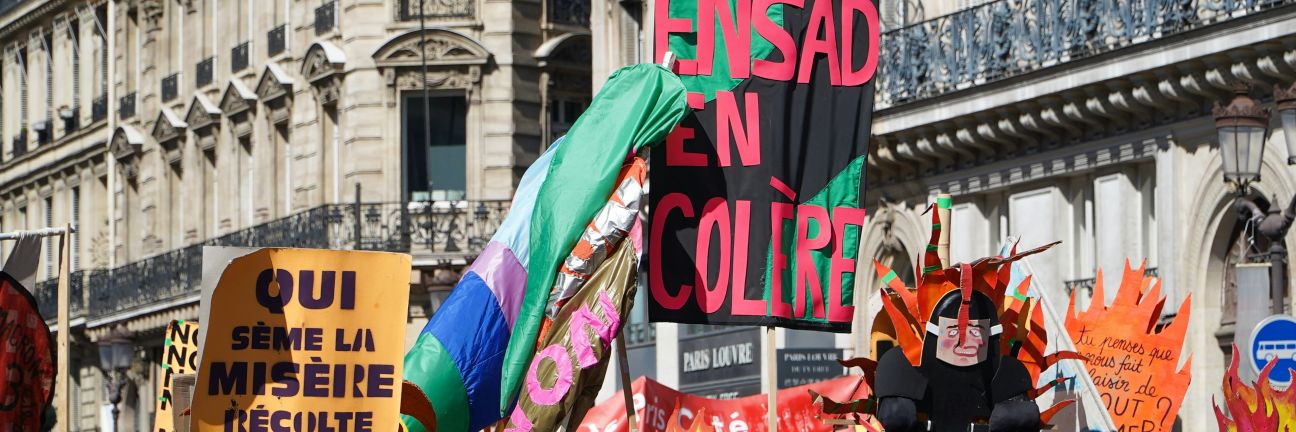
France is currently going through a new period of national strikes and demonstrations, including in Paris.
The movement began with protests led largely by high school and university students, who were calling for better conditions in schools and more resources. It then broadened as several major French trade unions joined the movement.
Today, the demands are wider and include higher wages, better protection of public services, concerns about jobs and the cost of living, and calls for greater tax fairness.
Several large demonstrations took place in October and early November 2026. On October 31, around 70,000 people demonstrated in Paris, according to the French Interior Ministry. Another nationwide day of mobilization was organized on November 5, with more than 220 demonstrations expected across France.
Most major demonstrations follow planned routes and are supervised by police. Most participants are peaceful, although some recent marches have also seen clashes, property damage and arrests involving smaller groups on the margins of the protests.
The important thing to understand is that these events are usually concentrated in specific areas of the city, rather than affecting Paris as a whole.
When dramatic images of Paris appear on international news, they are often showing one particular street or square at one particular moment — not the entire city.
Are There Protests in Paris Right Now?
Yes. Paris is currently seeing a new wave of demonstrations and strikes.
A nationwide day of action took place on Thursday, November 5, 2026, with a major Paris march from Place de la République to Place de la Nation. The French Interior Ministry later reported 65,000 participants in Paris that day.
Another gathering, often referred to as “Act IV,” is planned for Saturday, November 7, around Place de la Concorde. As of now, the gathering has been announced, although some details remain subject to approval by the Paris police prefecture.
There are also broader mobilizations planned later in the month. From November 20 to 22, unions and associations from several European countries are calling for coordinated protests around the cost of living, housing, wages and public services. The exact schedule for Paris may still change.
On December 4, additional national actions are planned, including a firefighters’ mobilization across France. Separate meetings and actions are also scheduled in Paris around December 3–4.
Further demonstrations may still be announced, so the calendar can change.
For residents and visitors, the main practical impact is usually transport and traffic around the protest route. A metro station may temporarily close, buses may be diverted, and traffic can be heavier or disrupted nearby.
Is Paris Safe to Travel to Right Now?
Yes — Paris is very much open and continues to welcome visitors from around the world. In the first three weeks of October 2026, tourist numbers in Paris were up 8.3% compared with the same period in 2025, showing that the city remains busy and attractive to international visitors despite the recent demonstrations.
Despite the headlines, everyday life continues normally across most of Paris.
With the Christmas season approaching, Paris is entering one of its most festive times of the year. Christmas lights are going up, department stores are unveiling their holiday window displays, Christmas markets are opening, and restaurants, museums, shops, and cafés continue to operate as usual.
One reassuring point for travelers is that major demonstrations in Paris are generally planned and declared in advance. Organizers provide the authorities with details such as the date, time and route, allowing police to prepare security measures, traffic restrictions and transportation changes. This means you can usually know where and when a major protest is expected and simply avoid that part of the city for a few hours.
From a safety perspective, demonstrations are usually limited to a specific route or area, with a police presence around them. Access to nearby streets, squares or metro stations may be temporarily restricted during a march, which helps keep the disruption contained.
And if you are worried that getting around Paris might be complicated during a protest, the good news is that Paris is a very walkable city. If you are staying in a central neighborhood, you can often get around easily on foot, even if a nearby metro station is temporarily closed. Many of the city’s main sights, cafés, shops and neighborhoods are close enough to reach on foot, so a transportation disruption does not necessarily stop you from enjoying the city.
For travelers coming to Paris for Christmas, the experience remains very much what people expect: shopping, cafés, museums, festive lights, Christmas markets and lively neighborhoods throughout the city.
Paris still feels like Paris: busy, international, welcoming and especially atmospheric as the Christmas season begins.
Is Paris Safe to Move to Right Now 2026?
Yes. If you are moving to Paris for work, studies, a corporate assignment or family reasons, there is no need to be overly concerned by the headlines.
One thing to understand is that public demonstrations are simply part of life in France. Paris sees several major marches and strike days throughout the year, often around well-known gathering points such as République, Bastille and Nation. For Parisians, this is simply part of city life.
Major marches are generally planned and declared in advance, with a set route and a police presence along and around the route. Most take place peacefully.
In everyday life, Parisians simply adapt. If a march is planned nearby, you check the route, avoid those streets for a few hours and use another metro station if necessary. For most residents, that is usually the extent of the disruption.
If you prefer a quieter residential environment, you may simply want to live a little farther from the main demonstration hubs. République, Bastille and Nation are lively and popular neighborhoods, but they are more frequently used for large public gatherings.
Quieter residential areas such as Passy or Auteuil in the 16th arrondissement, or many parts of the 15th arrondissement, are less commonly associated with major protest routes and may suit families or professionals looking for a calmer day-to-day environment.
Despite the headlines, international professionals, executives, families, diplomats and students continue to move to Paris and look for homes across the city.
Which Areas of Paris Are Popular With International Residents?
Choosing the right neighborhood often makes a much bigger difference to daily life than the question of whether demonstrations occasionally take place.
Paris 6th — Saint-Germain-des-Prés
The 6th is ideal if you want to feel right in the heart of Paris without living in one of the city’s main protest hubs.
Around Saint-Germain-des-Prés, Luxembourg Gardens and Odéon, daily life is elegant, walkable and generally calm, with cafés, bookstores, galleries and restaurants all close by.
It is especially popular with couples, professionals and international tenants looking for a furnished apartment for rent in Paris in a central but residential Left Bank setting.
Paris 7th — Invalides, École Militaire and Rue du Bac
The 7th is a particularly good choice for people who want a quieter, more elegant and residential side of central Paris.
Large avenues, embassies, schools and government institutions give the area a more formal and reassuring atmosphere, while neighborhoods around Rue du Bac and École Militaire still feel very local.
It is particularly popular with diplomats, corporate tenants and international families, and it is one of the areas we see most often in relocation searches.
Paris 8th — Monceau
Monceau works particularly well for executives who want to stay close to Paris’s main business districts without living in the busiest, most touristy parts of the arrondissement.
From Monceau, you are still close to areas such as the Champs-Élysées and Madeleine, but the atmosphere is much calmer and more residential.
The neighborhood is particularly popular with families and professionals thanks to its elegant streets, good schools and Parc Monceau, one of the nicest green spaces in central Paris.
For corporate tenants working in central or western Paris, it also makes daily commuting relatively easy.
Paris 16th
The 16th is one of the most popular areas for international families — and for good reason.
Passy and Auteuil are chic, quiet, green and residential, with spacious Haussmann-style apartments, good schools and much less nightlife than more central parts of Paris.
You are also close to the Bois de Boulogne, one of the city’s largest green spaces, with plenty of outdoor activities including tennis, boating, cycling, jogging and horseback riding.
With many embassies and diplomatic residences nearby, the area also tends to feel calm, well-kept and secure.
If you are worried about demonstrations or simply want a more peaceful day-to-day environment, the 16th is often one of the easiest areas for international families to settle into.
Paris 15th
The 15th is often overlooked by newcomers, but it is one of the most practical areas for families and professionals looking for a calmer residential lifestyle.
You generally get more space for your budget than in the very center, while still benefiting from good public transportation and easy access to the rest of Paris.
The neighbourhood feels local and residential, with plenty of independent shops, bakeries, markets, cafés and everyday services, as well as a good choice of schools.
For people moving to Paris who want a quieter environment without feeling too far from the centre, the 15th can be a very comfortable place to settle.
So, Is Paris Safe to Move to in 2026?
Paris is a major international capital, and occasional demonstrations are part of life here. For most residents, however, they have very little impact on everyday life.
People are still moving to Paris, starting new jobs, studying, relocating with international companies, renting apartments and building their lives here.
For someone planning a relocation, the most useful approach is to stay informed about what is happening locally.
Whether you are looking for a family home, a corporate rental or a furnished apartment for rent in Paris, the city continues to welcome people arriving from around the world.
Paris is still very much a city people come to work, study, build a career and make a home.