Security Deposit in France: How It Works and How to Get It Back
When renting an apartment in France, the security deposit is often one of the largest upfront expenses.
In this guide, we explain how security deposits work in France, how much a landlord can request, what can legally be deducted, how long the landlord has to return it, and what tenants can do to maximize their chances of receiving the full amount back.
What Is a Security Deposit in France?
The French term for a security deposit is dépôt de garantie.
It is an amount paid by the tenant to the landlord at the beginning of the tenancy. Its purpose is to protect the landlord if the tenant does not meet certain obligations under the lease.
It may be used, for example, to cover:
- unpaid rent;
- unpaid rental charges;
- damage caused during the tenancy;
- missing furniture or equipment;
- cleaning or repairs for which the tenant is responsible.
The security deposit is not an extra cost. It is money that still belongs to the tenant and must be returned at the end of the lease, except for any deductions that are clearly justified.
How Much Is the Security Deposit in France?
The maximum amount depends on the type of lease.
Unfurnished Lease for a Primary Residence
For an unfurnished property rented as the tenant’s principal residence, the deposit is limited to one month’s rent, excluding charges.
For example, if the rent is €1,700 plus €150 in monthly charges, the maximum deposit is generally €1,700, not €1,850.
Furnished Lease for a Primary Residence
For a furnished apartment rented as the tenant’s principal residence, the deposit may be up to two months’ rent, excluding charges.
For a furnished apartment with a base rent of €2,000 and €200 in monthly charges, the landlord may therefore request a deposit of up to €4,000.
Mobility Lease
A landlord cannot ask for a security deposit under a bail mobilité.
This type of lease is designed for people in specific temporary situations, such as students, interns, or professionals on short-term assignments. It runs from one to ten months and is only available for furnished properties.
That said, landlords can still request a guarantee, such as Visale. What they cannot do is try to get around the rule by calling a deposit something else or turning it into another compulsory payment.
Code civil, Company, and Secondary-Residence Leases
The one- or two-month rent limits mainly apply to leases governed by the French law of 6 July 1989, which covers most primary residences.
For a Code Civil lease, which is designed for specific situations such as a lease signed by a company or organisation, corporate accommodation provided during an assignment, or the rental of a secondary residence, the deposit is usually set freely in the contract.
For furnished apartments, it is commonly equivalent to two months’ rent. It may be higher for luxury or short-term corporate rentals, particularly when the landlord receives few or no additional guarantees.
When Is the Deposit Paid?
The security deposit is normally paid when the lease is signed, often together with the first month’s rent. The keys are generally not handed over until all required payments have been received.
Tenants should always keep proof of payment. A bank transfer is generally preferable because it creates a clear record of the amount, date, and recipient.
When paying by bank transfer, use a clear payment reference such as:
Security deposit – [property address] – [tenant’s name]
This may seem like a minor detail, but it can be useful if the payment must later be traced or distinguished from the first rent payment.
If the tenant pays the security deposit in cash, they can request that the landlord (or the real estate agency) provide a receipt confirming the payment.
Can the Deposit Be Used as the Final Month’s Rent?
You may hear people in France suggest not paying the final month’s rent and simply letting the landlord keep the security deposit instead. Some tenants consider doing this because they are worried that the deposit will not be returned after they move out.
However, this is not allowed. A tenant cannot use the security deposit to pay the final month’s rent.
The rent and the deposit serve two different purposes. Rent and charges must be paid until the lease officially ends. The security deposit is dealt with separately after the tenant has moved out, returned the keys, and completed the exit inventory with the landlord or property manager.
What Can Happen if You Do Not Pay the Final Month’s Rent?
If you skip the final rent payment, you may be treated as being in rent arrears. This could make it harder to challenge deposit deductions later, as the landlord may use the unpaid rent as part of their claim.
You may also be unable to obtain a quittance de loyer for the final month. This official rent receipt confirms that the rent and charges have been paid in full and may be requested when applying for another rental property.
The landlord or agency may also take legal recovery action. According to the official French guidance, they may seek a precautionary seizure of funds from the tenant’s bank account without first obtaining a court judgment. They may also ask the judge responsible for residential tenancy disputes, known in French as the juge des contentieux de la protection.
The safest approach is therefore to continue paying the rent and charges normally until the end of the lease. The deposit should then be returned after the keys have been handed back, subject to any properly justified deductions. The landlord must return it within the legal deadline, and late repayment may lead to a financial penalty.
Why the Entry Inventory Is Essential for Protecting Your Deposit
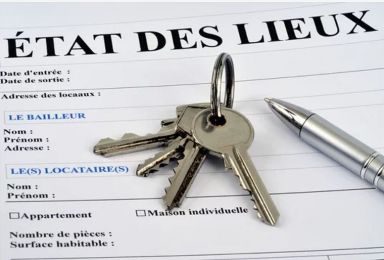
The état des lieux d’entrée, or entry inventory, is one of the most important documents in a French tenancy. It is completed when you move into the apartment. It records the condition of the property room by room, including the walls, floors, windows, furniture, appliances and other equipment. It may also include meter readings and a list of the keys you receive.
At the end of the lease, the landlord or property manager will compare it with the état des lieux de sortie, the exit inventory. This comparison is normally the starting point for determining whether damage occurred during the tenancy.
A quick check may seem enough when you are eager to move in, but anything you miss could end up costing you later.
Check every room carefully, including:
- floors, walls and ceilings;
- windows, shutters and curtains;
- doors, locks and handles;
- kitchen worktops and cupboards;
- appliances;
- bathroom fittings and seals;
- lighting;
- heating and air-conditioning systems;
- furniture, mattresses and upholstery;
- balconies and terraces;
- a cellar or parking space, where applicable.
Do not accept vague wording such as “good condition” if an item already shows signs of wear or damage. The entry inventory should describe each issue as clearly as possible.
A more useful description would be:
“Wooden floor in living room: several visible scratches near the window.”
Another example would be:
“Dining table: a small mark and heat stain on the left-hand side.”
It is also a good idea to take plenty of dated photos and videos when you move in, including close-ups of any scratches, stains, cracks or damaged furniture. Keep these files with your copy of the entry inventory, as they can provide useful evidence if there is a disagreement later.
The more detailed the entry inventory is, the easier it will be to prove which defects were already present and which damage occurred during the tenancy.
Report Problems Immediately After Moving Into a Rental
Some problems are easy to miss during the handover. An appliance may not work properly, a leak may only appear after you use the shower, a blind may get stuck or the heating may fail when you switch it on for the first time.
Once you move in, report anything you notice to the landlord or property manager as soon as possible and in writing, ideally with photos or videos. In France, it is always useful to keep a written record—une trace écrite—rather than relying only on phone calls or informal conversations.
You can ask for the entry inventory to be corrected or completed within 10 days of its completion. For problems affecting the heating system, you can make this request during the first month of the heating period. The landlord or agency should then add the issue to the inventory in writing.
A friendly phone call may solve the immediate problem, but an email or registered letter gives you proof that the defect was reported shortly after you moved in. This can be very important later if there is a disagreement about repairs, damage or deductions from your security deposit.
What Can a Landlord Deduct From the Deposit in France?
A landlord can deduct money from the security deposit, but only for costs that are the tenant’s responsibility and only when those costs can be justified.
Common deductions may include:
- unpaid rent or charges;
- tenant-caused damage;
- missing furniture or equipment;
- excessive cleaning required after departure;
- keys, badges or remote controls that were not returned;
- repairs that fall under the tenant’s maintenance responsibilities.
If the exit inventory shows damage that was not recorded when the tenant moved in, the landlord may deduct the cost of the necessary repairs. If the cost is higher than the deposit, the landlord may also ask the tenant to pay the difference.
However, the landlord cannot simply choose an amount without explanation. Any deduction should be supported by evidence, such as an invoice, a contractor’s estimate, photographs, unpaid rent statements, a comparison of the entry and exit inventories or, in the event of a serious disagreement, a constat de commissaire de justice, formerly called a constat d’huissier. This document is prepared by a judicial officer to record the condition of the property.
Normal wear and tear—known in French as vétusté—cannot be charged to the tenant. Marks and deterioration caused by time and normal use are the landlord’s responsibility, not the tenant’s.
Damage Is Not the Same as Normal Wear and Tear
This is one of the most important distinctions in deposit disputes.
A tenant is responsible for damage caused through misuse, negligence or insufficient maintenance. The tenant is not normally responsible for the natural ageing of the apartment and its equipment.
In French, normal wear and tear is called vétusté.
Examples of normal wear may include:
- paint gradually fading or becoming dull;
- flooring becoming lightly worn in frequently used areas;
- furniture ageing through ordinary use;
- seals naturally deteriorating over time;
- minor fading caused by sunlight.
Examples of tenant-caused damage may include:
- a large hole in a wall;
- a broken door;
- a badly stained or burnt worktop;
- a damaged mattress;
- broken furniture;
- deep scratches caused by moving heavy items;
- mould caused by the tenant’s failure to ventilate the property adequately or to report a known leak promptly.
Tenants are responsible for routine maintenance and minor repairs, but not for deterioration caused by age, construction defects, poor workmanship, accidental events outside their control or force majeure.
The age of the item matters. A landlord should not normally charge a tenant the full cost of a brand-new replacement when the original item was nearing the end of its useful life.
A ten-year-old sofa, for example, does not have the same remaining value as a sofa purchased six months before the tenancy.
Can a Landlord Charge a Tenant for Repainting After They Move Out?
Repainting is one of the most common causes of disagreement when a tenant moves out.
A landlord can charge the tenant for repainting, but only when the walls have suffered damage beyond normal wear and tear. This may include:
- large or numerous holes;
- drawings or writing on the walls;
- heavy stains;
- walls painted in dark colors that require significant work to return them to their original color;
- damage caused by tape, stickers or adhesive hooks.
If the walls only show normal wear, such as slight fading or a few small marks, the landlord should not charge the tenant for repainting the whole apartment.
The tenant is also not responsible for damage caused by a problem with the building itself, such as water infiltration or damp resulting from a defect in the walls or roof.
Before moving out, it is usually a good idea to fill unnecessary holes carefully. However, poor patchwork can sometimes look worse than the original damage, so use the correct materials and, where possible, matching paint.
Avoid repainting large areas at the last minute without checking the original colour and finish. A noticeably different shade may itself become an issue during the exit inventory.
Can a Landlord Deduct Cleaning Costs from the Security Deposit?
Yes, a landlord can deduct cleaning costs from the security deposit, but only if the apartment was left noticeably dirtier than it was at the beginning of the tenancy. The difference should be clearly recorded by comparing the entry and exit inventories, and any amount withheld must be supported by a reasonable invoice or estimate.
This may include:
- a greasy oven or extractor hood;
- heavy limescale;
- stained sanitary fittings;
- dirty cupboards;
- food left in the refrigerator;
- dusty furniture;
- unclean floors;
- dirty windows;
- rubbish or personal belongings left behind.
The apartment does not need to look like a hotel room, but it should be returned in a reasonably clean condition, taking into account how it was handed over at the start of the tenancy.
Before moving out, pay particular attention to easy-to-miss areas such as:
- underneath furniture;
- behind appliances;
- inside drawers;
- shower drains;
- washing-machine filters;
- refrigerator door seals;
- balcony corners;
- skirting boards;
- lampshades;
- the tops of cupboards.
For a larger furnished apartment, hiring a professional cleaner can be worthwhile. Keep the invoice, as it may help show that the property was properly cleaned before you left.
When Must the Deposit Be Returned in France?
For most residential leases in France, the deadline for returning the security deposit starts on the day the tenant hands back the keys.
The landlord generally has:
- one month to return the deposit if the exit inventory matches the entry inventory;
- two months if the exit inventory records damage or other differences.
The key-return date is therefore important. Make sure the keys are handed back formally and that you receive written confirmation. Avoid leaving them in a letterbox unless the landlord or agency has agreed to it in writing. Moving your belongings out does not, by itself, mean the tenancy has officially ended.
Ideally, the exit inventory should mention:
- the date the keys were returned;
- the number of keys, badges and remote controls handed back;
- your forwarding address;
- your bank details for the repayment.
Keeping a clear written record can help avoid confusion if the deposit is returned late or a disagreement arises.
Can the Landlord Keep Part of the Deposit for Building Charges After the Tenant Moves Out?
Yes. In France, tenants usually pay an estimated amount for building charges each month, based on the lease. These charges may cover services such as cold water, lift maintenance, cleaning of the common areas, a caretaker or collective heating.
At the end of the building’s accounting year, the actual expenses are calculated and a share is allocated to each apartment. The landlord then compares the amount the tenant has already paid with the tenant’s actual share.
If the final accounts are not yet available when the tenant moves out, the landlord may temporarily keep up to 20% of the security deposit. This allows time to complete the annual charge adjustment, known in French as the régularisation des charges.
If the tenant paid too much, the difference must be returned. If the tenant did not pay enough, the landlord may ask for the remaining amount.
This temporary retention is not a deduction for damage. It is simply an amount kept until the building charges can be calculated accurately.
What Can a Tenant Do if the Security Deposit Is Returned Late?
If your landlord does not return the security deposit within the legal deadline, you may be entitled to additional compensation.
For most standard residential leases in France, the amount still owed can increase by 10% of the monthly rent excluding charges for each month or part of a month of delay.
For example, if your monthly rent excluding charges was €1,500, a one-month delay could add €150 to the amount owed.
However, this increase may not apply if the delay was caused by the tenant, for example because no forwarding address was provided.
If the deposit is late, contact the landlord or agency in writing, ask for repayment and mention the legal deadline as well as the 10% increase.
How to Prepare for the Exit Inventory and Protect Your Security Deposit
It is best to start preparing at least one or two weeks before you move out, rather than leaving everything until the final day.
Take Care of Minor Repairs
Begin with any small repairs that are your responsibility. This may include filling small holes in the walls, replacing damaged silicone seals around the bath, shower or sink, tightening loose handles and replacing light bulbs that no longer work.
Take care when making repairs, as poor patchwork or mismatched paint can sometimes create a new problem.
Check the Furniture and Equipment List
In a furnished apartment, check the furniture and equipment inventory carefully. A missing lamp, remote control, chair, duvet or kitchen utensil may lead to a deduction from your deposit.
Replace inexpensive missing items where appropriate, but do not replace furniture or appliances with a different model without first discussing it with the owner or property manager.
Consider Professional Cleaning
Cleaning is one of the most important parts of preparing for the exit inventory.
If you are not confident that you can clean the apartment thoroughly yourself, hiring a professional cleaner is often worth the cost. Professional cleaners are more likely to notice easy-to-miss areas and usually have suitable products and equipment for a proper deep clean.
This can save you time, make the exit inventory less stressful and reduce the risk of cleaning costs being deducted from your security deposit. Keep the invoice as proof that the apartment was professionally cleaned before you moved out.
Cleaning Checklist Before the Exit Inventory
Kitchen
- Clean the oven, hob and extractor hood.
- Remove grease from tiles, splashbacks and cupboards.
- Clean inside the refrigerator, freezer, microwave and dishwasher.
- Empty and wipe all cupboards and drawers.
- Clean the sink, taps and drains.
- Remove all food, rubbish and personal belongings.
- Defrost the freezer if necessary.
- Clean behind and underneath appliances where accessible.
Bathroom
- Remove limescale from taps, shower screens and tiles.
- Clean the toilet, sink, bath and shower.
- Remove hair from drains.
- Clean mirrors, cupboards and shelves.
- Clean the washing-machine detergent drawer, filter and rubber seal.
- Remove surface mould caused by insufficient cleaning or ventilation.
- Replace any missing shower curtain or small bathroom item listed in the inventory.
Living Room and Bedrooms
- Vacuum and wash the floors.
- Dust furniture, shelves, radiators and skirting boards.
- Clean underneath beds, sofas and other furniture.
- Remove marks from walls where possible without damaging the paint.
- Clean windows, mirrors, frames and window sills.
- Empty and wipe wardrobes, cupboards and drawers.
- Check curtains, blinds and lampshades.
- Remove all personal belongings.
Bed Linen and Household Linen
- Wash sheets, pillowcases, duvet covers, and mattress protectors.
- Wash towels, bath mats, tea towels and tablecloths.
- Fold the clean linen neatly and return it to the correct room or storage area.
- Check that no linen is missing, stained, damaged or still damp.
Do You Need to Dry-Clean Household Linens Before Moving Out?
Tenants are not generally required to take items such as curtains, duvets or pillows to a dry cleaner unless the lease specifically includes this obligation.
Before cleaning these items, check the care labels and the inventory, as some fabrics may require professional treatment.
Furniture and Equipment
- Clean tables, chairs, sofas and mattresses.
- Check for stains, crumbs, dust and pet hair.
- Clean remote controls, switches and door handles.
- Return furniture to its original position.
- Check that all kitchen utensils and household items listed in the inventory are present.
Balcony, Terrace and Entrance
- Sweep and wash the floor.
- Remove leaves, rubbish and cigarette ends.
- Clean outdoor furniture.
- Empty the letterbox, cellar or storage area if included in the lease.
- Clean the entrance door and the area around the doorbell.
Complete the Final Checks
- Take out all the rubbish.
- Replace dead light bulbs where this is your responsibility.
- Make sure there are no strong cooking, smoke or pet odours.
- Gather all keys, access badges and remote controls.
- Take clear, dated photographs and videos after cleaning and before handing over the keys.
- Keep any professional cleaning or repair invoices.
How to Challenge a Security Deposit Deduction in France
Start by Contacting the Landlord or Agency in Writing
Begin by sending a clear written request to the landlord or real estate agency. Explain which deductions you disagree with and why you believe they are not justified.
Your message should include:
- the property address;
- the lease dates;
- the date the keys were returned;
- the original deposit amount;
- the amount repaid;
- the deductions you dispute;
- the evidence supporting your position;
- the amount you are asking the landlord to return.
Useful evidence may include the entry and exit inventories, photographs, invoices, emails, repair records or proof that the apartment was professionally cleaned.
Send a Formal Notice if Necessary
If the landlord or agency does not respond, or refuses to reconsider the deduction, you may need to send a formal notice by registered letter with acknowledgment of receipt.
This creates a clear written record of your request and shows that you have formally asked for the disputed amount to be returned.
Ask Your Local ADIL for Free Housing Advice
If the dispute is still not resolved, you can contact your local ADIL. This is a free and independent housing information service that explains tenants’ rights and the steps available to them.
An ADIL adviser can help you understand whether the deduction appears justified and explain which procedure may be appropriate in your situation.
Try Conciliation Before Going to Court
The procedure partly depends on the total amount you are claiming.
For a claim of €5,000 or less, the tenant must normally try to resolve the dispute amicably before taking the case to court. This may involve a judicial conciliator, mediation or a participatory procedure. The tenant may also contact the departmental conciliation commission (Commission départementale de conciliation), which helps tenants and landlords try to reach an agreement without going to court.
For a claim of more than €5,000, the tenant can generally bring the matter directly before the court. However, trying to reach an agreement first may still save time, stress and legal costs. For claims above this threshold, the proceedings are usually initiated through an assignation, which must be formally served on the landlord by a commissaire de justice.
Take the Dispute to Court if No Agreement Is Reached
If the tenant and landlord cannot reach an agreement, the tenant can ask the court to decide the dispute. The case must be brought before the judge responsible for residential tenancy disputes, known in French as the juge des contentieux de la protection.
The tenant has three years from the date the security deposit should have been returned to start the court process.
The procedure depends on the total amount being claimed:
- For €5,000 or less, the tenant can usually apply to the court in writing. This is called a requête.
- For more than €5,000, the tenant will normally need an assignation. This is a formal court document that must be delivered to the landlord by a commissaire de justice, a French judicial officer whose role includes formally serving legal documents.
The tenant should provide documents supporting the claim, including:
- the lease;
- the entry and exit inventories;
- proof of the security deposit payment;
- photographs or videos;
- invoices and estimates used to justify deductions;
- copies of emails and letters exchanged with the landlord;
- the formal notice requesting repayment;
- any written opinion or document issued by the departmental conciliation commission.
The court process may take several months, or longer if the court is busy, documents are missing, a hearing is postponed or the landlord contests the claim. There is no fixed timeframe, as the duration varies between courts and individual cases.
If the judge agrees with the tenant, the landlord may be ordered to return any amount that was withheld without proper justification. The tenant may also be able to claim the legal late-payment increase and compensation for any additional financial loss they can prove.
What Happens to Your Security Deposit When the Property Is Sold to a New Landlord?
If the apartment changes ownership during the tenancy, responsibility for returning the deposit passes to the new landlord.
The tenant should therefore claim repayment from the new owner at the end of the lease, even if the original deposit was paid to the previous owner. French law expressly places this responsibility on the new landlord after a sale, donation or other transfer of ownership.
Final Thoughts
For international tenants unfamiliar with French rental procedures, working with an experienced property agency can make this process easier. A professionally managed tenancy provides clearer inventories, organised maintenance records and a structured move-out process, reducing misunderstandings for both the tenant and the owner.
Paris Rental helps international tenants, companies and embassy staff find long-term furnished accommodation in Paris. Our team assists tenants at every stage, from the property search and lease signing to the entry inventory, tenancy management, and final move-out.