How Much Money Do You Need to Live Comfortably in Paris in 2026?
Paris is expensive. But the cost of living in Paris in 2026 depends enormously on how you want to live.
A student sharing an apartment in the 20th arrondissement can live in Paris on a very different budget from an American executive renting a furnished one-bedroom in Saint-Germain-des-Prés, eating out three times a week, and flying home several times a year.
In 2026, a single person living alone in Paris should generally think in terms of roughly:
- €2,400–€3,000 per month for a relatively careful, budget-conscious lifestyle;
- €3,800–€5,000 per month for a comfortable lifestyle with your own apartment, regular restaurants, activities, and room for unexpected expenses;
- €5,500+ per month if you want a central furnished apartment, frequent dining out, travel, shopping, and very little need to watch your spending.
Let’s break down what living in Paris actually costs in 2026.
What Does It Mean to Live Comfortably in Paris?
Comfortable does not necessarily mean luxury.
A comfortable Parisian lifestyle generally means:
- living alone rather than in a shared apartment;
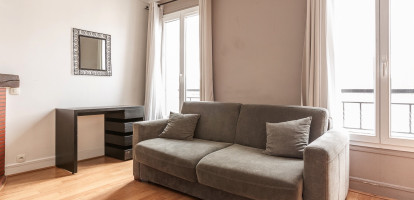
- having a one-bedroom apartment or a relatively spacious studio apartment;
- buying good groceries without calculating every item;
- eating at restaurants occasionally;
- having drinks or coffee with friends;
- using public transportation freely;
- paying for a gym, cultural activities, or hobbies;
- taking a few trips during the year;
- putting some money aside each month;
- not panicking every time an unexpected €200 expense appears.
How Much Should You Budget for Housing in Paris in 2026?
Rent will usually be your largest monthly expense in Paris.
For expats looking for a furnished apartment rental in Paris, a realistic monthly housing budget might look like this:
Budget lifestyle
If you are trying to keep housing costs down:
- room in a shared apartment: €800–€1,200;
- small furnished studio outside the most expensive central neighborhoods: €1,100–€1,500;
- furnished one-bedroom apartment in a less central arrondissement: approximately €1,500–€1,900.
Comfortable lifestyle
If you want your own well-located furnished apartment:
- good furnished studio: €1,400–€1,900;
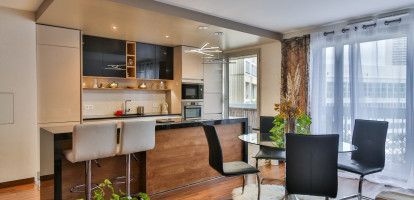
- furnished one-bedroom apartment: €1,800–€2,600;
- premium one-bedroom in sought-after neighborhoods such as Le Marais, the 6th, or the 7th arrondissement: often €2,300–€3,500+.
These figures are indicative and refer mainly to furnished long-term rentals. Unfurnished apartments can sometimes be less expensive, but you will need to factor in the cost of furniture, appliances, and setting up the property.
Paris Rental tip: If you are flexible about the arrondissement, housing is where you can make the biggest difference to your overall budget. Moving from Saint-Germain-des-Prés to the 14th, 15th, 17th, or parts of the 12th arrondissement can often give you considerably more space for the same monthly rent.
If you are looking for an apartment for rent in Paris, contact Paris Rental. Our team can help you find a furnished or unfurnished long-term rental that matches your budget, preferred neighborhood, and lifestyle.
Groceries: Around €250–€600 Per Month for One Person
Groceries in Paris are not necessarily expensive if you shop like a local, and you can often find good-quality fresh produce at reasonable prices.
The main difference comes from where you shop and how often you buy specialty or organic products.
For one person who cooks regularly at home, a typical monthly grocery budget might be:
- budget: around €250–€350 per month;
- comfortable: around €400–€600 per month.
Prices can vary quite a lot depending on the store and neighborhood. Shopping mostly at Lidl or ALDI will generally cost less than shopping at Monoprix, organic stores, local farmers’ markets, or specialty shops such as premium butchers, cheese shops, and neighborhood épiceries.
One pleasant surprise for some Americans is that good bread, cheese, seasonal produce, and wine do not necessarily have to be expensive in France.
According to Numbeo, grocery prices in Paris are around 18.5% lower than in New York.
How Much Does Eating Out Cost in Paris?
Paris has a huge range of restaurants, from simple neighborhood cafés to Michelin-starred dining.
You can still find a lunch formula for around €20, while a casual dinner will often cost €35–€50 per person.
In central or more upscale neighborhoods, however, prices can rise quickly.
A realistic monthly restaurant and café budget might be:
- budget: €100–€200;
- comfortable: €300–€600;
- very social lifestyle: €700+.
The good news for Americans is that you generally do not need to add a 15–20% tip in Paris. Service is already included in restaurant and café prices. Leaving a few euros for particularly good service is appreciated, but it is optional.
How Much Does Public Transportation Cost in Paris?
Compared with New York, London, or the cost of owning a car in Los Angeles, public transportation in Paris is relatively affordable.
The Navigo monthly pass costs €90.80 in 2026 and gives you unlimited travel across zones 1–5 on the Metro, RER, bus, and tram.
If you work in Paris, your employer must generally reimburse at least 50% of the cost of an eligible public transportation pass, which can bring your actual monthly commuting cost down to around €45.
Paris is also very walkable and bike-friendly. Shared bikes such as Vélib’, Lime, and Dott are widely available and offer an affordable way to get around.
For most people living in Paris, walking, cycling, and public transportation are enough for everyday life, so you really do not need a car.
How Much Utilities Cost in Paris?
In terms of basic utilities such as electricity, heating, and water, costs in Paris are fairly similar to those in the U.S. However, mobile phone plans and home internet are often much cheaper.
For a one-bedroom apartment in Paris, a realistic monthly budget might be:
- electricity: €50–€100, depending on heating and usage;
- internet: €25–€45;
- mobile phone: €10–€30;
- home insurance: approximately €10–€25.
Altogether, you might spend around €100–€200 per month on these recurring household costs.
If your apartment has electric heating, poor insulation, or a low DPE rating, winter electricity bills can be noticeably higher. On the other hand, if heating is provided through a central heating system, your individual utility costs may be lower.
How Much Does Health Care Cost in Paris?
One of the biggest advantages of living in France is the cost of health care.
The French healthcare system is generally made up of two parts: the public system, Assurance Maladie, which reimburses a large share of eligible medical expenses, and complementary private insurance, known as a mutuelle, which can cover some or all of the remaining costs.
If you are employed in France, you are generally covered through the French social security system. Health care is financed through social contributions linked to employment and income, so you do not usually pay a separate monthly premium for Assurance Maladie in the same way you might in the U.S.
For additional coverage, most employees also have access to a company mutuelle. Employers usually contribute to the cost, so the employee’s share may be around €20–€50 per month, depending on the company and level of coverage.
For many expats, this can make health care costs feel significantly lower and more predictable than in the U.S.
How Much Should You Budget for Entertainment in Paris?
This category really depends on your lifestyle.
A standard gym membership in Paris can cost around €25–€50 per month, while premium clubs can easily cost €100–€200+.
Movies, museums, concerts, drinks, fitness classes, shopping, beauty appointments, and weekends away can also add up quickly.
A reasonable monthly budget might be:
- budget lifestyle: €100–€200;
- comfortable lifestyle: €250–€500;
- active/social lifestyle: €500–€1,000+.
One of the nice things about Paris is that a lot of the city can be enjoyed for free.
Walking along the Seine, spending an afternoon in the Luxembourg Gardens, exploring different neighborhoods, sitting by the Canal Saint-Martin, or visiting museums with free permanent collections can easily fill a weekend without spending much.
Cost of Living in Paris in 2026: A Real Monthly Budget
For one person, here is a realistic comparison.
| Monthly expense | Budget-conscious lifestyle | Comfortable lifestyle |
|---|---|---|
| Rent | €1,100–€1,500 | €1,800–€2,600 |
| Groceries | €250–€350 | €400–€600 |
| Restaurants & cafés | €100–€200 | €300–€600 |
| Transportation | €45–€91 | €45–€150 |
| Utilities + internet + phone | €100–€180 | €150–€250 |
| Insurance / health extras | €30–€100 | €80–€200 |
| Leisure / gym / shopping | €100–€200 | €250–€500 |
| Miscellaneous | €150–€250 | €250–€400 |
| Approximate total | approximately €1,900–€2,900 | €3,275–€5,300 |
These totals reflect typical monthly spending. In practice, your take-home income should be slightly higher to leave room for savings and unexpected expenses.
€2,400–€3,000 net per month can be workable for a single person who keeps an eye on spending, especially with modest housing costs.
For a genuinely comfortable lifestyle while living alone, €4,000–€5,000 net per month gives you much more breathing room.
And if you want a premium furnished apartment in central Paris, travel frequently, dine out regularly, and save at the same time, €5,500–€6,000+ per month can disappear surprisingly quickly.
How Much Does a Couple Need to Live in Paris?
Couples have an advantage because rent and utilities are shared.
A couple without children could live reasonably comfortably in Paris on around €5,000–€6,000 of combined monthly take-home income, depending heavily on rent.
Around €6,500–€8,000 combined per month gives considerably more flexibility for a good apartment, restaurants, travel, and savings.
If both partners earn professional salaries, Paris can feel significantly more affordable than it does for a single renter.
How Much Does a Family Need to Live in Paris?
This is where the budget changes dramatically.
A family may need:
- a two-, three-, or four-bedroom apartment;
- childcare;
- international or bilingual schooling;
- additional transportation;
- more groceries;
- larger insurance and health expenses;
- after-school activities;
- possibly parking or a car.
Housing alone can easily reach €3,500–€6,000+ per month for the type of apartment international families often seek in the 7th, 15th, 16th, or 17th arrondissements.
If private international school fees are involved, the total household budget can rise substantially.
For an international family wanting a comfortable lifestyle in Paris, a household income of €8,000–€12,000+ per month after tax is not unusual, particularly when housing and schooling are not covered by an employer.
Corporate relocation packages make an enormous difference here.
What Is the Average Salary in Paris in 2026?
This is one of the biggest cultural shocks for professionals moving from the United States.
A job that might pay $120,000 or $150,000 in New York, San Francisco, Boston, or Seattle may pay considerably less in Paris.
According to the latest INSEE data, the average net monthly salary in Paris was €3,836 in 2024.
Because averages are pushed up by higher earners, the median salary is often more useful. In France, the median net monthly salary was around €2,190, meaning half of employees earned less and half earned more.
For managers and senior professionals, the average was €5,663 net per month.
That can feel low to an American expat.
But salary comparisons between France and the U.S. are not completely straightforward.
French employees typically receive benefits that Americans may otherwise pay for separately, including:
- heavily subsidized health care;
- employer contributions to complementary health insurance;
- at least five weeks of paid vacation for many employees;
- paid public holidays;
- subsidized public transportation;
- stronger unemployment and social protections;
- retirement contributions;
- maternity and parental protections.
You also generally do not need to budget hundreds of euros each month for a car if you live in Paris.
So yes, French salaries are often lower in absolute terms, particularly for highly skilled professionals. But the amount you need to pay out of pocket for health care, transportation, retirement, and other everyday services can also be very different.
Another advantage is travel: from Paris, you can often reach other European cities quickly and at relatively affordable prices, whether by train or low-cost flight.
For Americans who keep a U.S. salary while living and working in Paris, the difference in purchasing power can feel especially significant.
What Salary Is Considered Rich in Paris in 2026?
This question is more complicated than it sounds.
France does not have an official government definition of what it means to be “rich.” One commonly cited benchmark comes from the Observatoire des inégalités, which considers a person rich when their standard of living reaches twice the national median.
Its latest report, published in June 2026, places that threshold at €4,292 per month after taxes for a single person, based on the latest available income data.
But this is a national threshold, not a Paris-specific one. If we adjust it to reflect higher Paris incomes, an indicative equivalent would be around €5,600 per month after taxes for a single person. This is an estimate, not an official Paris threshold.
Even then, whether you actually feel rich in Paris depends heavily on your housing costs.