France LMNP Tax Reform 2027: What Furnished Rental Landlords Need to Know
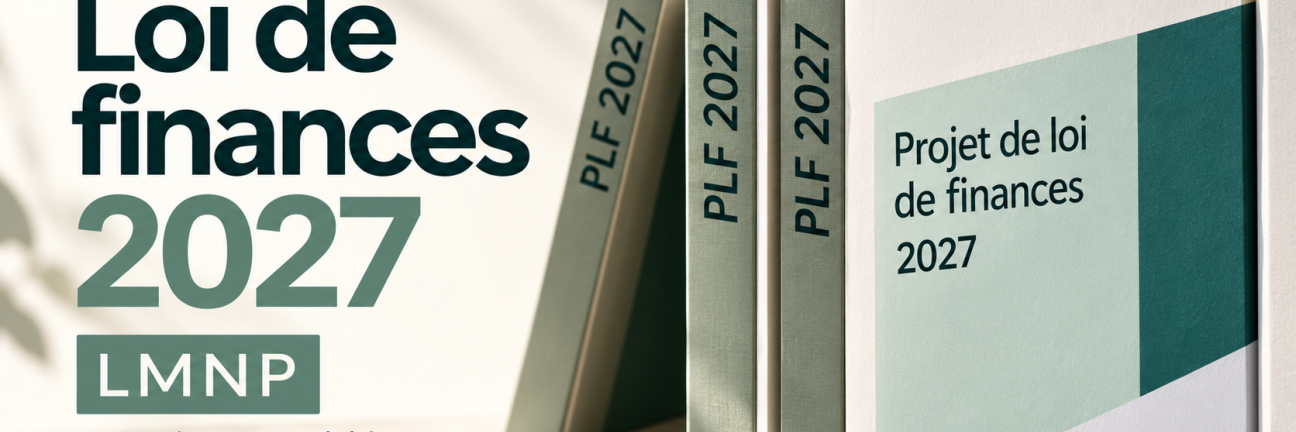
France’s LMNP tax regime for furnished rentals could change again in 2027.
LMNP stands for Loueur en Meublé Non Professionnel, or non-professional furnished rental landlord. It is one of the main tax regimes used by individual owners who rent out furnished property in France.
The 2027 French Finance Bill proposes new limits on depreciation deductions for landlords using the actual-expense tax regime, known in France as the régime réel.
For many landlords, especially those renting furnished apartments under a French Civil Code lease (bail Code civil), the main question is simple:
Will LMNP become less tax-efficient?
Potentially, yes. But at this stage, the reform is not final and could still change before the 2027 budget becomes law.
LMNP Tax in France: Micro-BIC vs. the Actual-Expense Regime
Income from furnished rentals in France is generally taxed under the BIC category (Bénéfices Industriels et Commerciaux).
For most LMNP landlords, there are two main tax options:
- Micro-BIC: a simplified system. Instead of deducting your actual expenses, the French tax authorities apply a standard deduction to your rental income.
- Actual-expense regime (régime réel): you can deduct eligible expenses such as loan interest, management fees, certain property expenses, and depreciation on the property and furniture.
The proposed 2027 reform mainly affects landlords using the actual-expense regime, because it changes how depreciation can be deducted.
What Could Change for LMNP Landlords in 2027?
Under the current actual-expense regime, LMNP landlords can deduct certain expenses and use depreciation to reduce their taxable rental income.
In simple terms, depreciation allows you to treat part of the property's value as an accounting expense each year, even though you are not actually paying that amount out of pocket.
This can significantly reduce the amount of rental income subject to tax.
The 2027 Finance Bill currently proposes limiting depreciation deductions to 2.5% of the property's value, with a maximum deduction of €7,000 per year per tax household.
There is another important proposed change.
Today, if you cannot use all of your depreciation in a given year, the unused amount can generally be carried forward and used in future years.
Under the current proposal, this carry-forward would be removed for new depreciation generated from 2027 onward. Depreciation accumulated before 2027 could still be used under a transitional rule through the end of 2036.
For some landlords, this could mean higher taxable rental income and therefore a higher tax bill.
LMNP Reform and French Civil Code Leases: Would Landlords Be Affected?
For landlords using a French Civil Code lease (bail Code civil), the answer is not yet final.
These leases are commonly used when the property is not the tenant’s primary residence, for example:
- a second home or pied-à-terre;
- corporate housing;
- an apartment rented directly to a company;
- accommodation provided as part of an employee’s job.
Recent discussions in Parliament have included proposals to protect certain types of long-term furnished rentals, particularly properties rented as the tenant's primary residence under France's standard residential lease rules. One proposed amendment would exclude certain primary-residence furnished rentals from the new depreciation cap, subject to conditions.
However, Civil Code leases are not automatically covered by those proposed exemptions.
This means landlords renting under a bail Code civil could still be affected by the 2027 LMNP reform, including the proposed cap on depreciation.
For now, nothing has changed. The existing LMNP rules remain in place until the 2027 Finance Bill is finally adopted.
Selling an LMNP Property: What Changed in 2025
LMNP rules already changed in 2025, mainly affecting what happens when you sell the property.
Under the actual-expense regime, depreciation can reduce your taxable rental income while you rent out the apartment.
Since February 15, 2025, most depreciation previously deducted is also taken into account when calculating the taxable capital gain when the property is sold.
For example, if you bought an apartment for €500,000 and deducted €50,000 in depreciation over the years, that €50,000 can increase the capital gain used for tax purposes when you sell.
So the idea is simple: depreciation can still lower your taxes during the rental period, but it can lead to more tax when you sell the property.
Certain specialized properties, including some student, senior, and disability residences, are exempt from this rule.
Is the 2027 LMNP Reform Final?
No.
The proposed changes are part of France’s 2027 Finance Bill, which was introduced in the National Assembly on October 1, 2026 and is still going through the legislative process.
This means the LMNP reform could still be changed, reduced, or removed before the 2027 budget becomes law.
For now, the current LMNP rules remain in place.
Landlords renting furnished property in France — especially under a Civil Code lease, corporate lease, or second-home lease — should still follow the reform closely, as it could affect the future tax treatment of their rental income.
At Paris Rental, we are monitoring the reform and what it could mean for owners of furnished apartments in Paris.