Living in Saint-Germain-des-Prés as an Expat: What It’s Really Like
For many Americans moving to Paris, Saint-Germain-des-Prés is the dream.
It has the cafés, the limestone buildings, the bookstores, the galleries, the quiet side streets, the Seine just a few minutes away, and that unmistakable Left Bank atmosphere people imagine when they picture life in Paris.
And yes, it really is beautiful.
But living in Saint-Germain-des-Prés is not exactly the same as spending a weekend there.
Some streets are wonderfully quiet. Others can be touristy and busy late into the evening. Apartments can be full of charm, but they may also come with small kitchens, old elevators—or no elevator at all—limited air conditioning, and very high rents.
So if you are thinking about moving to Saint-Germain-des-Prés as an expat, it helps to understand what the neighborhood is actually like day to day.
Why Is Saint-Germain-des-Prés So Famous?
Saint-Germain-des-Prés is one of the oldest and most historically important neighborhoods on Paris’s Left Bank.
Its story begins around the Abbey of Saint-Germain-des-Prés, founded in the 6th century. The church that remains today contains some of the oldest surviving Romanesque architecture in Paris, with parts of the tower and nave dating back to the 11th and 12th centuries.
Over the centuries, the neighborhood developed beyond the medieval abbey walls and gradually became one of Paris’s great intellectual and cultural centers.
By the 19th and especially the 20th century, Saint-Germain became closely associated with writers, philosophers, painters, publishers, musicians, and political thinkers. Its cafés became part of the intellectual life of Paris.
Café de Flore, opened in the late 19th century, became associated with generations of writers and artists, from Guillaume Apollinaire and André Breton to Jean-Paul Sartre, Simone de Beauvoir, Albert Camus, and later artists, filmmakers, designers, and musicians.
Les Deux Magots and Brasserie Lipp developed a similar reputation, and all three remain some of the neighborhood’s most recognizable institutions today.
That history is still very visible when you live here. Saint-Germain does not feel like a neighborhood that was designed to look old. It actually grew over centuries, and that is part of its charm.
What Does the Architecture Look Like in Saint-Germain-des-Prés?
One of the reasons Saint-Germain-des-Prés feels different from many other parts of Paris is that its architecture is not entirely Haussmannian.
You will certainly find elegant 19th-century Parisian buildings with limestone façades, wrought-iron balconies, tall windows, parquet floors, moldings, and fireplaces.
But there are also many older buildings, especially on smaller streets around Rue Jacob, Rue de Seine, Rue Bonaparte, and Rue de l’Abbaye.
Some buildings date from the 17th and 18th centuries, and you will also find former hôtels particuliers, inner courtyards, narrow staircases, exposed beams, unusual floor plans, and apartments that have clearly evolved over several centuries. Rue Jacob, for example, is lined largely with buildings from the 18th and 19th centuries.
This creates a lot of character, but it also means that apartments can vary enormously from one building to another.
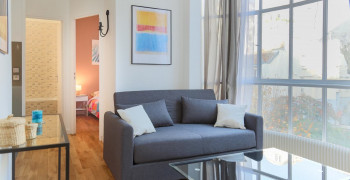
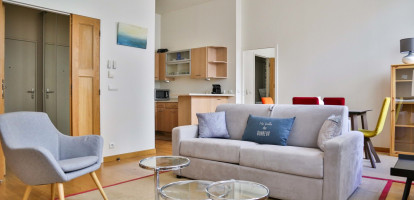
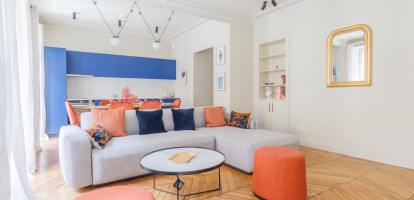
A beautifully renovated apartment may have:
- original parquet floors;
- decorative fireplaces;
- exposed beams;
- high ceilings;
- courtyard views;
- large French windows;
- period moldings;
- a renovated contemporary kitchen inside a historic shell.
But an older building may also mean:
- no elevator;
- narrow stairs;
- irregular room shapes;
- smaller bathrooms;
- limited storage;
- less insulation;
- no central air conditioning.
This is one of those neighborhoods where you really need to judge the apartment, not just the address.
What Is It Actually Like to Live in Saint-Germain-des-Prés?
The biggest advantage is simple: almost everything is within walking distance.
You can walk to the Seine, the Louvre, the Luxembourg Gardens, the Latin Quarter, Odéon, the Marais across the river, and many parts of central Paris without thinking twice about public transportation.
The area itself is also very convenient. You have bakeries, pharmacies, supermarkets, specialty food stores, restaurants, cafés, bookshops, galleries, fashion boutiques, antique dealers, and markets all close by.
For Americans moving to Paris without a car, this can make everyday life surprisingly easy.
The neighborhood is also extremely well connected by public transportation, with Metro lines 4 and 10 nearby, as well as easy access to Odéon and several bus routes.
But what makes Saint-Germain especially attractive to many expats is that it feels both very Parisian and relatively easy to settle into. English is widely understood in many shops and restaurants, and the neighborhood has a well-established international community.
The Advantages of Living in Saint-Germain-des-Prés
You are genuinely in the heart of Paris
If you want to experience central Paris every day rather than visit it on weekends, Saint-Germain is difficult to beat. You can walk along the Seine in the morning, cross to the Louvre in minutes, meet friends near Odéon, and have dinner around Rue de Buci without needing to plan your day around transportation.
The neighborhood has real character
Saint-Germain-des-Prés feels historic without feeling frozen in time. Its mix of churches, galleries, cafés, old bookshops, fashion stores, hidden courtyards, and residential streets gives it a personality that is difficult to reproduce elsewhere.
It is excellent for walking
This is one of the biggest quality-of-life advantages.
Daily errands, cafés, restaurants, parks, cultural sites, and transport are generally close by. For example, you can often walk to a bakery or grocery store in 2–5 minutes, reach a café or restaurant in 5–10 minutes, get to a local park in 5–15 minutes, and arrive at a Metro station in about 5–10 minutes. Central destinations such as the Louvre, Notre-Dame, or the Latin Quarter may be 15–30 minutes away on foot, depending on where you live.
For many Americans coming from car-dependent cities, this is one of the parts of Parisian life they enjoy most.
It’s expat-friendly, even if you don’t speak French
Saint-Germain has long attracted foreign writers, artists, diplomats, students, executives, and families. You will hear English regularly, especially around the main shopping and café areas.
That does not mean it feels “American,” but it can make the first few months in Paris feel less intimidating.
What Are the Downsides of Living in Saint-Germain-des-Prés?
Saint-Germain is beautiful, but it is not perfect.
It is expensive
This is the most obvious drawback.
Saint-Germain-des-Prés remains one of the most expensive areas in Paris for living, renting, and buying real estate. For example, a one-bedroom apartment can easily cost €2,000 per month, while purchasing even a modest property may require a budget of well over €18,000 per square meter, compared with around €9,900 per square meter on average in Paris. You pay a significant premium for the address, even when the apartment itself is small or requires renovation.
The high prices extend beyond housing. Everyday expenses, including groceries, cafés, restaurants, services, and parking, are also generally more expensive than in many other parts of Paris.
Some streets are noisy
This is one of the most important things to understand before signing a lease.
Saint-Germain-des-Prés is not one uniform neighborhood. Some parts are extremely touristy, while others are more residential and calm. Restaurants, terraces, bars, deliveries, scooters, and late-night pedestrians can make certain streets surprisingly noisy.
An apartment above Rue de Buci can have a completely different atmosphere from an apartment on Rue Jacob.
Therefore, when looking for an apartment, check carefully whether the bedroom faces the street or the courtyard. That one detail can completely change your experience.
Older buildings can be inconvenient
Historic charm often comes with practical compromises. Many buildings in Saint-Germain-des-Prés date from the 17th and 18th centuries, which contributes to the neighborhood’s historic character but can also mean older layouts and fewer modern conveniences.
You may find:
- no elevator;
- small kitchens;
- limited closet space;
- narrow staircases;
- older windows;
- little or no air conditioning;
- limited insulation.
If you are coming from the U.S., especially from a newer apartment building, these differences can be more noticeable than you expect.
It can feel touristy in some areas
Around Boulevard Saint-Germain, Rue de Buci, and Rue Saint-André-des-Arts, there is a constant flow of visitors throughout the day and into the evening, especially on weekends.
If you want a quieter, more local atmosphere and don't want to bump into tourists on Sunday morning when you go out for a run or to get your croissant, focus on the smaller residential streets rather than the most famous addresses.
The Best Streets to Live on in Saint-Germain-des-Prés
This is where local knowledge really matters.
Two apartments can be five minutes apart, both in Saint-Germain-des-Prés, and offer completely different living experiences.
Rue Jacob
Rue Jacob is a favorite among locals and expats looking for the classic, chic Saint-Germain atmosphere without too much noise.
It is a small street that runs between Rue de Seine and Rue des Saints-Pères. It has a more intimate feel than the busier commercial streets nearby while remaining lively.
You will find galleries, bookshops, independent fashion boutiques, local restaurants, elegant façades, old buildings, and a strong literary atmosphere. The street is particularly associated with publishers, writers, and the artistic history of the neighborhood.
Rue de Seine
Rue de Seine is beautiful and extremely central, with a unique artistic vibe.
It connects the Seine with the heart of Saint-Germain and is known for its numerous art galleries. Toward the southern end of the street, you’ll also find restaurants, cafés, and easy access to Rue de Buci.
It can be busy during the day, but at night, once the galleries have closed, the street is generally quiet.
Rue Bonaparte
Rue Bonaparte is a relatively long street that runs from the Seine, past Saint-Sulpice, to the Jardin du Luxembourg. It has a distinctly different atmosphere in each section.
The street is lined with elegant buildings and former hôtels particuliers, giving it a more refined feel than some of the busier commercial streets nearby.
At the beginning of the street, close to the Seine, you will find refined designer home décor boutiques, fabric shops, and galleries. The middle section has more fashion shops and watch and jewelry boutiques. Toward the end of the street, near the Jardin du Luxembourg, the atmosphere becomes more residential, peaceful, and quiet.
Rue de l’Abbaye
Rue de l’Abbaye is a small, charming street beside the church of Saint-Germain-des-Prés and the famous Place de Furstenberg.
It offers one of the most recognizable settings in Saint-Germain: a narrow historic street with beautiful buildings, refined boutiques and direct views of the church.
Properties are very limited, making this one of the area’s most exclusive places to live on the Left Bank. Apartments rarely come onto the market, so if you find a good one, you are paying for a truly special location.
Rue de Buci
Rue de Buci is one of the liveliest streets in Saint-Germain. That said, it is also one of the most touristy streets on the Left Bank.
It is packed with cafés, terraces, food shops, restaurants, and people almost all day long. It is fantastic if you want energy. You can walk downstairs and immediately be surrounded by cafés, terraces, bakeries, and neighborhood life.
But it is not the street we would recommend to someone who is sensitive to noise.
Rue Saint-André-des-Arts
One of the liveliest streets on the Left Bank, Rue Saint-André-des-Arts is close to Odéon and Saint-Michel and has a youthful, bustling atmosphere. It is incredibly central and convenient, but it also attracts heavy pedestrian traffic and can feel very touristy.
However, its historic architecture is full of character.
For younger expats, couples, or anyone who wants to feel at the heart of Parisian life, the area can be a lot of fun. For families or very light sleepers, however, there may be better options nearby.
Rue de Furstemberg
Rue de Furstemberg is one of the most expensive streets in Paris and one of the prettiest corners of Saint-Germain-des-Prés. Its square-like section around Place de Furstemberg feels almost hidden from the rest of the city, creating a quiet and intimate atmosphere.
The area is associated with Eugène Delacroix, whose former home and studio are nearby. It was also featured in the film The Age of Innocence.
Apartments are rare and often expensive, but the atmosphere is exceptional: quiet, intimate, and unmistakably Parisian.
Rue des Saints-Pères
Rue des Saints-Pères runs toward the Seine and separates parts of the 6th and 7th arrondissements, combining an artistic atmosphere with an academic vibe.
You will find many galleries and antique shops, as well as well-known academic institutions such as École Nationale Supérieure des Beaux-Arts, Université Paris Cité, and Sciences Po. Toward the ends of the street, it becomes more commercial, with many fashion and jewelry shops.
How Much Does It Cost to Rent an Apartment in Saint-Germain-des-Prés?
Saint-Germain-des-Prés is firmly at the premium end of the Paris rental market.
For international tenants looking for high-quality furnished apartments, realistic monthly budgets can often look more like:
- one-bedroom: around €2,300–€3,000+;
- two-bedroom: around €3,500–€5,500+;
- larger premium apartments: €6,000, €8,000, €10,000+ depending on size and quality.
The exact street can also make a meaningful difference.
How Much Does It Cost to Buy an Apartment in Saint-Germain-des-Prés?
Buying is even more expensive.
The average apartment price in Saint-Germain-des-Prés is around €18,000 per square meter, although prices vary considerably depending on the exact address and the quality of the property.
On some of the neighborhood’s most prestigious streets, prices can be significantly higher, such as Rue de Furstemberg (€22,503/m²), Rue Guynemer (€21,105/m²), and Rue de l’Abbaye (€20,733/m²).
This means that a beautiful 100 m² apartment can easily cost more than €1.8 million, while exceptional properties in the most sought-after locations can exceed €2 million.
Iconic Places You Will Actually Have Around You
Living in Saint-Germain means many places that tourists cross Paris to visit become part of your regular neighborhood.
Église Saint-Germain-des-Prés
The church of Saint-Germain-des-Prés is the historic heart of the neighborhood and one of the oldest religious sites in Paris.
Its tower and parts of the nave preserve some of the city’s oldest surviving Romanesque architecture, reflecting more than a thousand years of history. The former abbey was once one of the most important religious and intellectual centers on the Left Bank.
Even if you are not religious, it is well worth stepping inside. The contrast between the ancient stone, painted interiors, and the lively cafés just outside gives Saint-Germain-des-Prés much of its unique atmosphere.
It is one of those landmarks that makes the neighborhood feel deeply connected to the history of Paris.
Café de Flore
Yes, it is famous. Yes, it is touristy. But Café de Flore is still one of those places that really belongs to Saint-Germain-des-Prés.
Opened in 1887, it became closely tied to the literary and artistic life of the neighborhood, with writers and thinkers such as Apollinaire, Sartre, Simone de Beauvoir, and Camus among its famous regulars.
If you actually live nearby, the best way to enjoy it is not to go at the busiest weekend hours. Try a weekday morning, ideally fairly early, when Boulevard Saint-Germain is calmer and the atmosphere feels much more local.
You also do not need to make a full meal out of it. Part of the pleasure is simply sitting down for one of the classics — a café, a hot chocolate, or something small — and taking your time.
The prices are high, and there are plenty of places nearby where you will probably eat better for less money. But that is not really the point. Café de Flore is more about the setting on the terrace, the people-watching, and the feeling of sitting in a place that has been part of Saint-Germain life for well over a century.
Les Deux Magots
Right across from the church of Saint-Germain-des-Prés, Les Deux Magots is another one of those places that is impossible to separate from the neighborhood.
Like Café de Flore, it has a long history with writers, artists, philosophers, and intellectuals. James Joyce, Ernest Hemingway, Simone de Beauvoir, Jean-Paul Sartre, and many others were associated with the café over the years.
Today, it is very popular with visitors, so the experience really depends on when you go.
If you live nearby, try going early on a weekday morning rather than at lunchtime or on a sunny weekend afternoon. The terrace is much calmer, the church is right in front of you, and the whole area feels more like a neighborhood than a tourist destination.
Brasserie Lipp
Just across Boulevard Saint-Germain from Café de Flore, Brasserie Lipp has a very different personality.
Opened in 1880, it became a regular meeting place for writers, journalists, politicians, and intellectuals, and that political-literary atmosphere is still part of its identity today. The interior is worth noticing too: large mirrors, painted ceramics, mosaics, and Art Nouveau details give it the feel of a classic Parisian brasserie from another era.
It is famous for its classic French brasserie dishes. The menu has stayed deliberately traditional, with dishes such as choucroute alsacienne, pot-au-feu, profiteroles, and baba au rhum.
If you live in the neighborhood, it is the kind of place to try when you want a true old-school Saint-Germain dining experience, rather than somewhere you would necessarily eat every week.
Place de Furstemberg and Musée Delacroix
Place de Furstemberg is one of the most charming little corners of Saint-Germain-des-Prés. Tucked just off Rue de l’Abbaye, it feels almost hidden, with elegant façades, a few trees, and a much quieter atmosphere than the busier streets nearby.
The square is closely connected to Eugène Delacroix, one of France’s most important Romantic painters. His former apartment and studio, now the Musée National Eugène-Delacroix, are just steps away and give you a glimpse into the more artistic and intimate side of the neighborhood.
What makes this spot special is how peaceful it can feel despite being right in the heart of Saint-Germain. It is the kind of place you might walk through on your way home, stop for a few minutes, and almost forget that Boulevard Saint-Germain is only a short walk away.
Luxembourg Gardens
Technically just outside the heart of Saint-Germain-des-Prés, the Luxembourg Gardens are close enough that, if you live nearby, they can easily become part of your everyday routine.
The gardens have a very local rhythm throughout the day. Early in the morning, you will see runners and regulars doing their usual loop. Around lunchtime, students and office workers come with sandwiches. On weekends, families gather around the playgrounds and the famous pond where children sail small wooden boats.
If you live in the southern part of Saint-Germain, especially around Rue de Rennes, Saint-Sulpice, or Rue Bonaparte, having the Luxembourg Gardens within walking distance is a real quality-of-life advantage—particularly if your apartment does not have a balcony or outdoor space.
Hidden Local Spots to Discover in Saint-Germain-des-Prés
Beyond Café de Flore and Les Deux Magots, Saint-Germain-des-Prés is full of quieter corners that are easy to miss if you only stay on the main streets.
Musée Eugène Delacroix and Its Garden
Hidden behind Place de Furstemberg, the former home and studio of painter Eugène Delacroix is now a small museum. The real surprise is the peaceful garden behind the building. It feels almost secret and offers a calm break from the busy streets nearby.
Cour du Commerce Saint-André
This narrow cobbled passage connects Boulevard Saint-Germain with Rue Saint-André-des-Arts and feels like stepping into another period of Paris.
You’ll find historic façades, small restaurants, and traces of the neighborhood’s revolutionary past. It is one of the best places to experience the older, more intimate side of the Left Bank.
Rue Visconti
One of the narrowest and most atmospheric streets in Saint-Germain-des-Prés, Rue Visconti is easy to walk past without noticing. Writers, artists, and publishers have lived here over the centuries, and today it remains a beautiful little street lined with old buildings, galleries, and discreet entrances.
Square Laurent-Prache
Right beside the Église Saint-Germain-des-Prés, this small public garden is a lovely place to sit for a few minutes with a coffee or pastry.
It is not really a tourist attraction, which is exactly what makes it pleasant. You can sit beneath the trees while looking directly at one of the oldest churches in Paris.
These small streets, passages, gardens, and courtyards are part of what makes living in Saint-Germain-des-Prés different from simply visiting it. The neighborhood reveals itself gradually, and many of its most memorable places are hidden just a few steps away from the famous cafés and boulevards.
Why American Expats Love Living in Saint-Germain-des-Prés
For Americans used to a more car-dependent lifestyle, living in Saint-Germain-des-Prés can feel like a completely different way of life.
Almost everything is within walking distance. Step outside and you’ll find bakeries, grocery stores, cafés, restaurants, local markets, bookstores, pharmacies, and everyday services just a few minutes away. It makes daily life easier, but also more social: you can stop for coffee, pick up fresh bread, meet friends for dinner, or simply walk through the neighborhood without planning a car journey.
That walkability gives Saint-Germain-des-Prés a real “village within the city” feeling. At the same time, you are surrounded by beautiful historic architecture, elegant façades, quiet side streets, and some of the most iconic places on the Left Bank.
The atmosphere is chic, refined, and distinctly Parisian without feeling disconnected from everyday life.
Paris Rental Tip: Visit the Street, Not Just the Apartment
One of the best pieces of advice we can give is simple:
go back to the street at a different time of day before you sign.
A street that feels quiet at 11 a.m. may be full of restaurant terraces at 9 p.m. Check the area in the morning, late afternoon, and ideally once in the evening.
Listen for traffic.
Look at the restaurants below.
And always ask whether the bedroom faces the street or an interior courtyard.
In Saint-Germain-des-Prés, micro-location matters almost as much as the apartment itself.
At Paris Rental, we have been helping international tenants find long-term furnished and unfurnished apartments in Paris since 1987. We regularly work with Americans and other expatriates looking for homes in Saint-Germain-des-Prés and throughout the 6th arrondissement.
We offer a large selection of rental properties throughout the 6th arrondissement, from classic Parisian apartments near Saint-Germain-des-Prés and the Luxembourg Gardens to spacious family homes and high-end furnished rentals.
Our team can help you understand not only the apartment itself, but also what it will actually be like to live in the neighborhood day to day.
Credit photo: Photo from Parsa Mahmoudi on Unsplash.