Haussmann Apartment or Modern Residence in Paris: Which One Is Best for Expats?
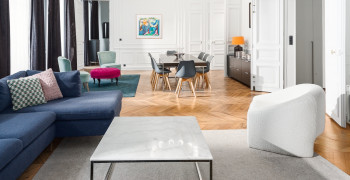
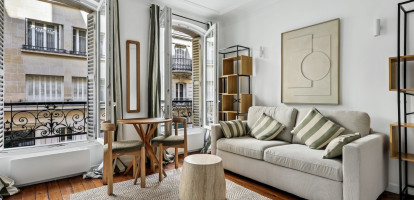
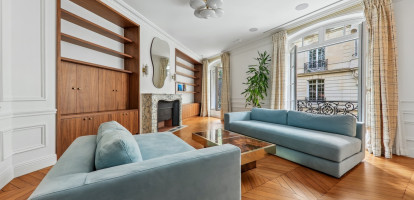
When moving to Paris, many international tenants imagine themselves living in a classic apartment with high ceilings, parquet flooring, marble fireplaces, decorative mouldings and tall French windows. In other words, the iconic Haussmann apartment.
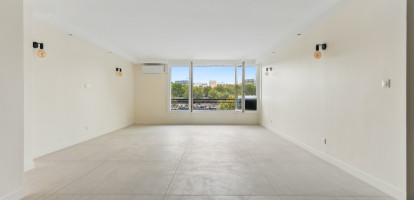
However, Paris also offers many more recent properties, from post-war buildings constructed between the 1945 and 1975 to contemporary residences completed after 2000. These apartments may have less historic character, but they often provide greater everyday comfort, with elevators, underground parking, balconies, better insulation and more functional layouts.
For an expat planning a long-term rental in Paris, the right choice is not simply between “beautiful” and “modern.” It is about finding the right balance between Parisian charm, location, space, comfort and practicality.
This guide compares Haussmann apartments and modern residences to help you decide which type of property best suits your lifestyle in Paris.
Haussmann Apartment or Modern Residence: The Main Differences
Before looking at each option in detail, here is a simple overview of their main characteristics.
Haussmann Apartment
- Main appeal: classic Parisian architecture and period features.
- Typical location: central and western Paris.
- Layout: separate rooms, reception areas and long corridors.
- Ceiling height: often generous.
- Elevator: sometimes small or unavailable.
- Parking: rare.
- Insulation: varies considerably depending on renovation.
- Best suited to: tenants who value architecture, character and prestigious locations.
Modern Residence
- Main appeal: practicality, accessibility and modern comfort.
- Typical location: outer Paris and nearby western suburbs.
- Layout: more efficient and easier to furnish.
- Ceiling height: generally more standard.
- Elevator: usually available and more spacious.
- Parking: more commonly available.
- Insulation: often better, although it depends on the building.
- Best suited to: families and tenants prioritising functionality and easy daily living.
What Is a Haussmann Apartment?
A Haussmann apartment is located in one of the elegant stone buildings that define much of central Paris.
These buildings were constructed mainly during the second half of the nineteenth century, when Baron Haussmann transformed Paris under Emperor Napoleon III. Medieval streets were replaced by wider boulevards, and rows of coordinated buildings were created to give the city a more harmonious and monumental appearance.
Haussmann buildings are usually easy to recognise by their:
- light-coloured stone façades;
- wrought-iron balconies;
- tall, symmetrical windows;
- regular proportions;
- decorative cornices and architectural details.
Inside, a traditional Haussmann apartment often includes:
- high ceilings;
- parquet flooring;
- decorative mouldings;
- marble fireplaces;
- large windows;
- long corridors;
- separate living and dining rooms;
- a kitchen separated from the reception areas.
For many international tenants, this is the type of apartment they picture before arriving in Paris.
Where Are Haussmann Apartments Found in Paris?
Haussmann buildings can be found throughout the capital, but they are especially common in central and western districts.
Popular areas include:
- the 7th arrondissement, near Invalides and the Eiffel Tower;
- the 8th arrondissement, around Madeleine, Monceau and the Champs-Élysées;
- the 9th arrondissement, around Opéra and Saint-Georges;
- the 16th arrondissement, particularly around Passy and Trocadéro;
- the 17th arrondissement, around Monceau, Ternes and Batignolles.
Beautiful Haussmann apartments can also be found in many other areas, depending on the street and the period in which the neighbourhood was developed.
The Advantages of Renting a Haussmann Apartment
Classic Parisian Character
The main advantage of a Haussmann apartment is its character. Original parquet flooring, mouldings, fireplaces and tall windows create an atmosphere that is difficult to reproduce in a modern building.
For many expats, living in this type of apartment is part of the Paris experience. Even a relatively simple property can feel distinctive when its historic features have been preserved.
Elegant Reception Rooms
Haussmann apartments were designed during a period when entertaining at home played an important social role.
Larger apartments may therefore include:
- a formal living room;
- a separate dining room;
- interconnecting reception rooms;
- a spacious entrance hall;
- large rooms overlooking the street.
This type of layout can be particularly attractive for diplomats, senior executives, families or tenants who regularly host guests and professional dinners.
High Ceilings and a Sense of Space
High ceilings give Haussmann apartments a strong sense of space, while tall windows allow plenty of natural light to enter.
Apartments located on higher floors, especially those facing wide boulevards or offering open views, tend to be particularly bright.
Prestigious and Convenient Locations
Haussmann buildings are commonly found in some of the most desirable areas of Paris, particularly in the 7th, 8th, 9th, 16th, and 17th arrondissements.
These neighbourhoods offer an upscale environment and convenient access to international schools, embassies, offices, shops, restaurants, parks, and public transport. For expats, location is especially important. Being able to walk to daily services, use the metro easily, or live close to international schools or business districts can make the transition to Paris much smoother.
A Separate Chambre de Service
Some large Haussmann apartments are rented with a separate chambre de service, a small room located on the top floor and originally intended for domestic staff.
Depending on its size, condition and equipment, it may be used as:
- a home office;
- a guest room;
- additional storage;
- accommodation for an au pair or nanny.
Some chambres de service are very basic, while others have been fully renovated. Their intended use should always be confirmed with the landlord, as well as their legal and practical suitability for occupation.
The Practical Limitations of Haussmann Apartments
Haussmann apartments are beautiful, but they were not designed around contemporary lifestyles. International tenants can therefore encounter several unexpected compromises.
Traditional Layouts
Traditional Haussmann apartments often have long corridors, separate rooms, and sometimes a less open layout. The kitchen may be separated from the main living area or located at the other end of the apartment.
Bathrooms can be smaller than expected. There may also be only one toilet, with no separate guest WC.
For some people, this is charming. For others, especially those used to open-plan living, large wardrobes, and modern bathrooms, it can feel less practical.
Small Elevators or No Elevator
Many Haussmann buildings now have elevators, but they were often added long after construction and fitted into narrow stairwells. As a result, the elevator may only accommodate one or two people. It may also stop on a half-landing rather than directly at the apartment floor.
During the viewing, check whether the elevator can accommodate:
- a stroller;
- large suitcases;
- a wheelchair or mobility equipment;
- daily shopping;
- bulky furniture.
Some buildings still have no elevator at all, which can become a major consideration for a long-term tenancy.
Soundproofing and Street Noise
The sound insulation of historic buildings varies widely. In some apartments, thick walls provide good protection from neighboring rooms, while wooden floors may transmit footsteps from above.
Street-facing apartments can also be exposed to traffic, scooters, deliveries and nightlife, particularly if the windows are old or single-glazed.
Always check whether the bedrooms face the street or the courtyard, and open the windows during the viewing to assess the actual noise level.
Heating and Thermal Insulation
High ceilings and older windows can make some Haussmann apartments more difficult and more expensive to heat.
Heating may be individual or collective, and comfort can vary greatly depending on:
- the quality of the windows;
- the building’s insulation;
- the apartment’s floor and orientation;
- the heating system;
- whether the apartment has been renovated.
Before renting, review the energy performance certificate and ask what type of heating is installed.
Limited Storage
Despite their large reception rooms, some Haussmann apartments provide surprisingly little built-in storage.
Closets may be shallow, bedrooms may lack fitted wardrobes, and long corridors can take up a significant part of the floor area.
A cellar can be useful for storing suitcases, seasonal items or wine, but its condition and accessibility should be checked carefully.
Few Modern Amenities
Haussmann buildings usually do not offer the same amenities as modern residences. Parking is very rare. Balconies, when available, are often narrow and may not provide enough space for outdoor dining. Installing air conditioning can also be difficult, as it may require approval from the building’s co-ownership association and, in some cases, local authorities. Storage space inside the apartment may be limited, although many properties include a cellar in the building.
Of course, some Haussmann apartments have been fully renovated to a very high standard. These can offer the best of both worlds: historic charm with modern comfort. But they are also more expensive and highly sought after.
What Is Considered a Modern Residence in Paris?
In Paris, the expression “modern residence” can refer to several generations of buildings constructed after the Second World War.
Post-War Buildings: 1945 to 1975
These buildings were developed partly in response to housing shortages. They often offer more functional layouts than historic apartments and may include:
- elevators;
- central heating;
- balconies;
- parking areas;
- larger windows;
- more regular room shapes.
However, the quality of sound and thermal insulation varies greatly depending on the building and any renovation work completed since construction.
Late-Twentieth-Century Residences: 1975 to 2000
Residences built from the late 1970s onward often place greater emphasis on security, balconies, parking and efficient layouts.
They may also be smaller in scale and better integrated into residential neighbourhoods than some larger post-war developments.
Contemporary Residences Built After 2000
More recent developments generally provide improved insulation and accessibility.
Depending on the residence, features may include:
- double glazing;
- step-free entrances;
- larger elevators;
- bicycle rooms;
- underground parking;
- terraces or balconies;
- shared gardens;
- modern heating systems.
Where Are Modern Residences Found?
Modern residences are particularly common in the outer arrondissements of Paris and in nearby suburbs.
In Paris, they can frequently be found in:
- the 12th arrondissement;
- the 13th arrondissement;
- the 15th arrondissement;
- parts of the 16th and 17th arrondissements;
- the 19th arrondissement;
- the 20th arrondissement.
They are also common in western suburbs popular with expat families, including:
- Neuilly-sur-Seine;
- Boulogne-Billancourt;
- Levallois-Perret;
- Saint-Cloud;
- Courbevoie;
- Puteaux.
The Advantages of Modern Residences for Expats
More Functional Layouts
Modern apartments usually have more efficient and functional layouts. Bedrooms and kitchens may be larger, open-plan living and dining areas are more common, and there is often less wasted space in long corridors or oversized entrance halls.
For families, this can make a real difference, as the apartment may feel more spacious and easier to use in everyday life.
Better Accessibility
Modern residences are much more likely to have elevators, which are generally larger and more practical than those found in older buildings. Many also offer step-free access or entrances adapted for people with reduced mobility.
This can be a major advantage if you have children, use a stroller, travel with heavy luggage, or simply prefer not to climb several flights of stairs every day.
For a long-term rental, accessibility matters more than many people realise, especially when it comes to daily routines, moving in, and welcoming older relatives or guests with reduced mobility.
Underground Parking
Parking is much more likely to be available in a modern residence than in a central Haussmann building. If you plan to keep a car, this can be a significant advantage and may save you the difficulty and cost of finding street parking or renting a separate space nearby.
More Secure Access
Modern residences frequently provide several layers of controlled access.
These may include:
- a keypad entry system;
- an intercom or videophone;
- reinforced entrance doors;
- controlled access to elevators;
- secured underground parking;
- a concierge or caretaker.
Better Insulation and Comfort
Modern buildings often offer better sound and thermal insulation, as well as better-performing windows or double glazing, although this depends on the building’s age, construction quality, and maintenance.
This can mean less noise from the street or neighbouring apartments, more stable indoor temperatures, and better overall comfort throughout the year. Improved insulation may also help reduce heating costs.
This can be particularly important if you work from home, have young children, or are sensitive to noise.
Balconies and Outdoor Space
Modern apartments are more likely to have usable balconies or terraces than Haussmann apartments.
Unlike a narrow decorative balcony, a modern balcony may provide enough room for a table, chairs or plants, depending on its size.
The Downsides of Modern Residences
Modern residences are practical, but they may not offer the same emotional appeal.
Less Architectural Character
The main drawback is often the lack of character. Some modern buildings can feel more neutral or standardised in their design. You may not get the mouldings, marble fireplaces, original parquet flooring, or classic façades that many foreigners associate with Paris.
For some tenants, this does not matter. For others, it makes the apartment feel less special.
Lower Ceilings
High ceilings are also much less common in modern residences. While Haussmann apartments often have ceiling heights of around 2.8 to 3.2 metres, modern apartments usually have more standard proportions around 2.4 to 2.6 metres.
This does not necessarily make them feel small, especially when the layout is open and efficient, but they rarely offer the same sense of grandeur and volume as a classic Parisian apartment.
Locations Further from Historic Paris
Modern residences are often found slightly farther from the historic centre or in quieter, more residential neighbourhoods. This can be a real advantage if you are looking for peace, space, and a more family-friendly environment, but it may be less suitable if your dream is to live in the heart of Saint-Germain-des-Prés or Le Marais.
The 15th and 16th arrondissements, as well as Boulogne, Neuilly, and Saint-Cloud, are particularly popular with families. These areas offer easy access to parks, green spaces, local shops, and a wide choice of French and international schools.
The Best Option: Charm with Modern Comfort
The ideal apartment often combines the advantages of both: a beautiful Haussmann apartment that has been renovated to provide modern comfort, or a modern residence located in a pleasant, well-connected Paris neighbourhood.
For example, a renovated Haussmann apartment with double glazing, a contemporary kitchen, well-designed bathrooms, built-in storage, and an elevator can be an excellent choice.
On the other hand, a modern apartment with a balcony, an open view, parking, and good transport connections can be a very smart choice, especially for families.
The key is not to make your decision based on photos alone. Photos can showcase an apartment’s charm, but everyday comfort often depends on details that only become apparent during a visit.
Final Tips Before Renting in Paris
A Haussmann apartment can make you fall in love immediately. A modern residence may make a less immediate impression but prove more comfortable in everyday life.
For expats coming to Paris, the right choice depends on the balance between Parisian charm and practical comfort.
If experiencing classic Parisian architecture is one of your main priorities, a Haussmann apartment may be the right choice. If you are relocating with your family, working from home, or planning to stay for several years, a modern residence may be more comfortable.
In Paris, charm matters. But for a long-term rental, comfort, natural light, quiet bedrooms, storage, and accessibility are often what truly make an apartment feel like home.
Photo via Unsplash