Which Floor Should You Choose When Renting an Apartment in Paris?
When searching for a long-term rental in Paris, most tenants initially focus on the neighborhood, monthly rent, apartment size or the presence of a balcony. However, one detail can have a major impact on everyday comfort: the floor level.
In Paris, the floor of an apartment influences much more than the view. It can affect natural light, street noise, privacy, security, temperature, accessibility and even how practical the apartment feels over time.
A beautiful apartment may seem perfect during a short viewing, but living on the sixth floor without an elevator or on a dark ground floor can become frustrating after several months. Understanding how Parisian buildings are organized will help you make a more informed choice.
How Floor Levels Work in France
Floor numbering in France may be different from what you are used to, especially if you are coming from the United States, the United Kingdom or another country with a different system.
In France, the street-level floor is called the rez-de-chaussée, or ground floor. The premier étage, meaning first floor, is located one level above the street.
As a result, an apartment described as being on the first floor in France may correspond to what some international tenants would call the second floor.
- Rez-de-chaussée: street level.
- 1er étage: one level above the street.
- 2e étage: two levels above the street.
- Dernier étage: top floor.
This distinction is important when reading property listings, arranging visits and evaluating whether an apartment will be easy to access.
Why Floor Level Matters in Paris
Choosing a floor is not simply a question of whether you prefer stairs or an open view. The floor level can affect several aspects of daily life.
- Natural light: higher floors generally receive more daylight.
- Noise: lower floors are usually more exposed to traffic, deliveries and nightlife.
- Privacy: apartments close to street level are more visible from outside.
- Security: ground-floor apartments require particular attention to windows and access points.
- Temperature: top floors may become hot in summer, while lower floors can be cooler and more humid.
- Accessibility: stairs become an important consideration in buildings without elevators.
- Views: upper floors may offer open views over rooftops, monuments or the Paris skyline.
Understanding Traditional Haussmann Buildings
Many apartments in central Paris are located in Haussmann-style buildings, the elegant stone buildings constructed during the nineteenth century.
These buildings generally contain five to seven floors above the ground floor. Their internal organization originally reflected a social hierarchy.
Before elevators became common, the most prestigious apartments were not necessarily on the highest floors. Residents wanted to live high enough to benefit from light and status, but not so high that climbing the stairs became difficult.
The Typical Layout of a Haussmann Building
Ground Floor — Rez-de-Chaussée
The ground floor was traditionally used for shops, storage areas, concierge accommodation or access to the inner courtyard. Some buildings also contain residential apartments at this level.
These apartments can be convenient, but they are often less sought after because they may be darker, noisier and less private.
First Floor — Former Professional or Service Areas
The first floor is located directly above the ground floor. In some Haussmann buildings, it has lower ceilings than the floors above.
Historically, this level was sometimes used for offices, commercial activities or service areas rather than prestigious family apartments.
Second Floor — The Noble Floor
The second floor, traditionally known as the étage noble, was often the most prestigious level in the building.
Apartments on this floor may feature:
- high ceilings;
- large French windows;
- ornamental moldings;
- marble fireplaces;
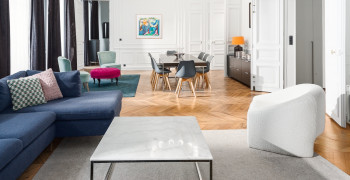
- herringbone parquet flooring;
- a continuous balcony.
Before elevators, this floor offered the ideal balance between prestige, daylight and accessibility.
Third and Fourth Floors — Balanced and Practical
The third and fourth floors generally offer a good combination of natural light, privacy and distance from street-level activity.
Today, these levels are among the most popular choices for long-term renters, especially when the building has an elevator.
Fifth Floor — More Light and Possible Balconies
The fifth floor often receives more daylight and may offer a more open view over the surrounding buildings.
Some Haussmann buildings have a long balcony at this level, originally added to create visual symmetry with the balcony on the second floor.
Without an elevator, however, daily access can become tiring.
Sixth Floor and Top Floor — Former Service Rooms
The uppermost level was traditionally reserved for domestic staff. It often contained small rooms known as chambres de bonne.
Some of these rooms have since been combined and renovated into studios or compact apartments. They can be charming and bright, but may have sloped ceilings, limited space and less efficient insulation.
Parisian Buildings Beyond the Haussmann Style
Not every Paris apartment is located in a nineteenth-century building. The city also contains Art Deco residences, post-war buildings and modern developments.
In neighborhoods developed during the 1950s, 1960s and 1970s, buildings may have ten, fifteen or more floors. These residences are more likely to offer:
- larger elevators;
- underground parking;
- central heating;
- more regular floor plans;
- wide balconies;
- open views from the upper floors.
The experience of living on the tenth floor of a modern building with elevators is therefore very different from living on the sixth floor of an old walk-up.
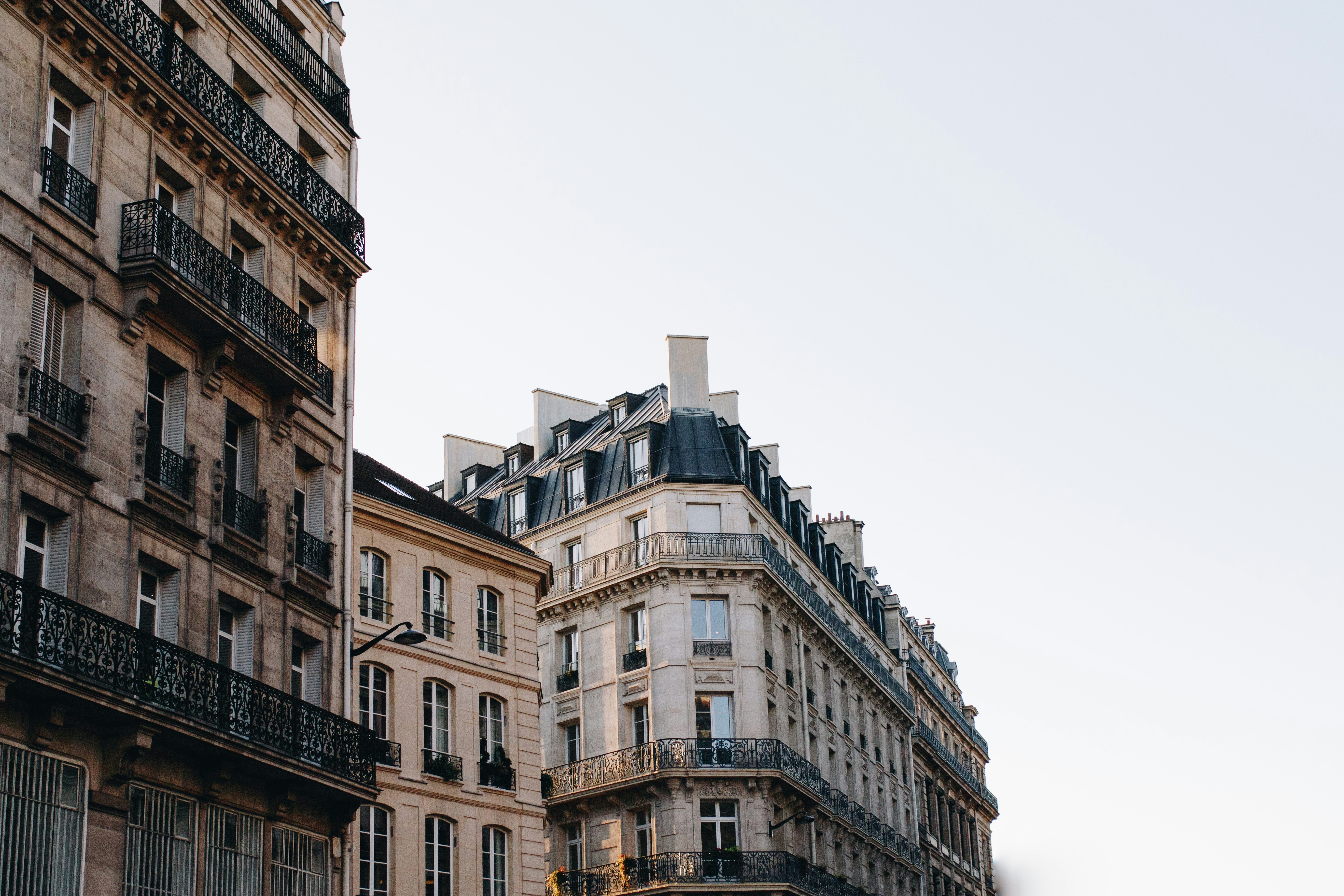
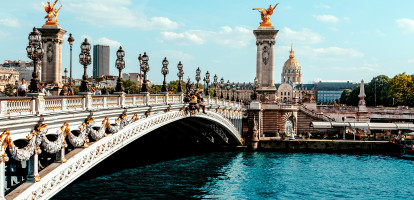
Photo by Salomé Watel on Unsplash
Ground-Floor Apartments: Convenient but Less Private
A ground-floor apartment can be practical for tenants who want to avoid stairs or need easy access for children, luggage, bicycles or reduced mobility.
Advantages of a Ground-Floor Apartment
- No stairs or elevator required.
- Easy access with luggage, shopping bags or a stroller.
- Often cooler during periods of hot weather.
- May be slightly less expensive than an equivalent apartment on a higher floor.
- Some properties offer access to a private courtyard or garden.
Privacy Concerns
Privacy is often the main disadvantage. In a street-facing apartment, pedestrians may pass directly in front of the windows.
Keeping the curtains or shutters closed may solve the privacy issue, but it can also reduce natural light.
A courtyard-facing ground-floor apartment may be quieter, although neighbors may regularly walk past the windows or entrance.
Limited Natural Light
Ground-floor apartments are often darker, particularly when they face a narrow street, a small courtyard or a tall building opposite.
This can be an important issue if you work from home or spend much of the day inside the apartment.
Security Considerations
Because the windows and doors are closer to street level, security should be checked carefully.
Look for:
- reinforced locks;
- secure shutters;
- window locks;
- security glass;
- an entry code or intercom;
- good lighting in the courtyard and entrance hall.
When Is a Ground Floor a Good Choice?
A ground-floor apartment can work well if it is bright, secure and sufficiently separated from passing pedestrians.
A unit overlooking a private courtyard or garden may feel very different from one located directly beside a busy pavement.
First and Second Floors: Easy Access with More Street Activity
The first and second floors are practical choices in buildings without elevators. They allow tenants to avoid a long daily climb while providing more privacy than a ground-floor apartment.
Advantages of the First and Second Floors
- Easy access without depending on an elevator.
- Suitable for families with young children.
- More practical for groceries, luggage and frequent travel.
- Generally more private than the ground floor.
- In Haussmann buildings, the second floor may contain the most elegant architectural features.
Street Noise Can Be More Noticeable
Because these floors remain relatively close to the street, traffic, scooters, rubbish collection, deliveries and late-night conversations may be easier to hear.
Noise levels depend greatly on the type of street:
- a major boulevard may have continuous traffic noise;
- a busy shopping street may be noisy during the day;
- a nightlife area may become louder in the evening;
- a narrow residential street may remain relatively calm.
Good-quality double glazing can make a major difference.
Check the Privacy
On the first floor, the apartment may still be visible from the opposite building, a bus or the pavement, depending on the width of the street.
During the viewing, stand near the windows and check whether people outside can easily see into the main living areas.
Third and Fourth Floors: The Best Overall Balance
For many long-term tenants, the third or fourth floor offers the best balance between accessibility, natural light, privacy and reduced street noise.
Better Natural Light
At this height, the apartment is less likely to be blocked by parked vehicles, street-level structures or low surrounding walls.
This additional daylight is particularly valuable during the Paris winter, when the days are shorter and the sky is often overcast.
Less Street Noise
The apartment remains connected to the activity of the neighborhood, but direct noise from engines, pedestrians and deliveries is generally less intrusive than on the lower floors.
Greater Privacy
The windows are less exposed to pedestrians, making it easier to leave curtains open and enjoy the available daylight.
The Importance of an Elevator
A third-floor walk-up remains manageable for many tenants, while a fourth-floor walk-up can feel more demanding, especially over a long tenancy.
Before committing, consider how often you:
- carry groceries;
- travel with heavy luggage;
- use a stroller;
- receive elderly relatives;
- transport sports equipment;
- order large deliveries.
Fifth Floor and Above: More Light, Views and Stairs
Higher floors often deliver the qualities many international tenants imagine when looking for a Paris apartment: open sky, rooftop views, abundant daylight and greater privacy.
Advantages of Higher Floors
More Natural Light
Upper-floor apartments usually receive more direct or indirect daylight because fewer surrounding buildings block the windows.
More Sky and Better Views
Depending on the orientation and location, you may see Paris rooftops, church towers, monuments or a broader section of the skyline.
Less Direct Street Noise
Traffic and pedestrian noise may feel more distant, although sound can still travel upward in narrow streets and enclosed courtyards.
Greater Privacy
Higher apartments are generally less visible from the street and may have fewer direct views from neighboring properties.
The Main Disadvantage: No Elevator
Many old Paris buildings either have no elevator or have a very small one that does not serve every floor.
A fifth- or sixth-floor walk-up may feel acceptable during a short viewing, but daily life can be different.
Consider the impact of:
- carrying food and household supplies;
- returning home after a long day;
- traveling frequently with suitcases;
- moving furniture;
- receiving visitors with mobility difficulties;
- an elevator temporarily being out of service.
Top-Floor Apartments: Parisian Charm with Practical Limits
A top-floor apartment can be one of the most attractive options in Paris. It may be bright, quiet and full of character, with views over zinc rooftops and chimney pots.
However, the top floor also requires the most careful inspection.
Heat During the Summer
The roof absorbs heat throughout the day, and the apartment may become very warm during periods of hot weather.
Air conditioning remains relatively uncommon in Paris apartments, particularly in historic buildings. Before renting, check:
- whether the windows create cross-ventilation;
- whether exterior shutters or blinds are installed;
- the quality of the roof insulation;
- whether portable air-conditioning equipment is permitted;
- whether the bedroom receives direct afternoon sun.
Insulation and Winter Comfort
A poorly insulated top-floor apartment may also lose heat during winter, increasing energy consumption and reducing comfort.
Review the energy performance certificate and ask about previous heating bills when possible.
Sloped Ceilings
Sloped ceilings can give an apartment character, but they may reduce the usable area and make furniture placement more difficult.
The advertised floor area may not fully reflect how much of the apartment can be used comfortably while standing.
Roof and Water-Infiltration Risks
During the viewing, check ceilings and upper walls for stains, discoloration or signs of previous water infiltration.
These signs do not always indicate an active problem, but they should be clarified before signing the lease.
What Is a Chambre de Bonne?
A chambre de bonne is a former maid’s room usually located on the top floor of a Haussmann building.
These rooms were originally designed as basic accommodation for domestic staff. They are often small, typically around 10 to 15 square meters, although some have been combined to create larger studios.
Points to Check Carefully
- The actual usable floor area.
- The ceiling height.
- Whether the toilet and shower are private or shared.
- The quality of the insulation.
- The number of stairs and presence of an elevator.
- The kitchen facilities.
- Ventilation and summer temperature.
- Storage space.
A renovated chambre de bonne can be charming for one person, but it should be evaluated carefully before being chosen as a long-term home.
The Elevator Question
In Paris, the floor level cannot be considered separately from the presence and quality of the elevator.
A fifth-floor apartment with an elevator offers a very different experience from a fifth-floor apartment without one.
What to Check During the Viewing
- Does the elevator serve the apartment’s exact floor?
- Does it stop at a half-landing?
- Is it large enough for daily use?
- Can it accommodate a stroller or suitcase?
- Does it require climbing several steps before reaching it?
- Does the building appear to maintain it properly?
- Would moving furniture require using the stairs?
Elevators in historic buildings can be extremely narrow. They may be useful for one person but unsuitable for furniture, large luggage or mobility equipment.
Which Floor Is Best for Different Tenant Profiles?
For Families with Young Children
A first, second or third floor with an elevator is often the most practical. Easy access is especially valuable when carrying a stroller, shopping or children’s belongings.
For Professionals Working from Home
A third floor or higher may provide better natural light and greater privacy. However, the orientation and distance from neighboring buildings remain equally important.
For Frequent Travelers
Choose a lower floor or a building with a reliable elevator. Regularly carrying suitcases up five flights of stairs can quickly become inconvenient.
For Light Sleepers
A middle or upper floor with bedrooms facing a courtyard is generally preferable. Avoid apartments above restaurants, bars, entrance doors or rubbish-storage areas.
For Tenants with Reduced Mobility
A ground-floor apartment or a building with step-free elevator access is likely to be the most appropriate choice.
Do not assume that the presence of an elevator means the apartment is fully accessible. Entrance steps, half-landings and narrow cabins are common.
For Tenants Looking for Classic Parisian Charm
A second-floor Haussmann apartment may offer high ceilings, moldings, fireplaces and a balcony. A top-floor apartment may instead offer rooftop views, exposed beams and a quieter atmosphere.
Which Floor Is Usually the Best Choice?
There is no single perfect floor for every renter, but the following guide can help you narrow your search.
- Ground floor: choose it for accessibility, provided the apartment is secure, private and sufficiently bright.
- First or second floor: a practical option for easy access, especially in a building without an elevator.
- Third or fourth floor: often the best overall balance of light, privacy, reduced noise and accessibility.
- Fifth floor or above: suitable for tenants prioritizing light and views, ideally with an elevator.
- Top floor: ideal for charm and quiet, provided insulation, temperature and layout have been carefully checked.
Questions to Ask During the Apartment Viewing
- What is the exact floor according to the French numbering system?
- Is there an elevator?
- Does the elevator serve this exact floor?
- How many stairs are there before reaching the elevator?
- Does the apartment face the street or the courtyard?
- What is the apartment’s orientation?
- Does the apartment receive direct sunlight?
- Are the windows double-glazed?
- Is there significant traffic or nightlife nearby?
- Does the apartment become hot during summer?
- Has the roof or top floor been insulated?
- Are there shutters or exterior blinds?
- Are there signs of moisture or water infiltration?
- Can furniture and large appliances be transported easily?
Floor-Level Checklist for a Long-Term Rental
- Confirm the French floor number.
- Test the elevator rather than relying on the listing.
- Climb the stairs at a normal pace.
- Check natural light with the lights switched off.
- Open the windows and listen to the surrounding noise.
- Check the view from each main room.
- Assess privacy from the street and neighboring buildings.
- Inspect windows, shutters and locks.
- Review the insulation and energy performance.
- Consider summer heat on the top floor.
- Consider groceries, luggage, children and visitors.
- Evaluate the apartment for everyday life, not only for its first impression.
Frequently Asked Questions About Apartment Floors in Paris
What Is the Best Floor in a Paris Apartment?
For many tenants, the third or fourth floor provides the best balance between natural light, privacy, reduced street noise and accessibility.
Is a Ground-Floor Apartment Safe in Paris?
It can be, provided the apartment has secure windows, shutters, strong locks and controlled building access. The exact location and exposure of the windows should be checked carefully.
Is a Fifth-Floor Apartment Without an Elevator Manageable?
It may be manageable for some tenants, but it can become tiring over a long tenancy. Your travel habits, health, shopping routine and expected visitors should all be considered.
Are Top-Floor Apartments Always Hot?
Not always. The temperature depends on the roof insulation, orientation, ventilation, window protection and exposure to direct sunlight. However, the risk of overheating is generally higher than on lower floors.
Which Floor Is Quietest?
Upper floors are generally further from street noise, but the quietest option often depends on the apartment’s orientation. A bedroom facing a peaceful courtyard may be quieter than a higher room facing a busy boulevard.
Does a Higher Floor Always Mean More Light?
Usually, but not necessarily. Orientation, window size, the width of the street and the height of surrounding buildings also determine how much daylight enters the apartment.
Choose for Daily Comfort, Not Only for the View
The floor level is one of the most important practical details to consider when renting an apartment in Paris.
A panoramic rooftop view may be impressive during a visit, but daily comfort depends on much more: the number of stairs, elevator access, natural light, noise, privacy, insulation and summer temperature.
For a long-term rental, think about how the apartment will fit your everyday routine. A well-chosen floor can make your home brighter, quieter and easier to live in, while the wrong choice can turn a beautiful apartment into a daily inconvenience.
Taking the time to evaluate the floor carefully can make a significant difference to your overall experience of living in Paris.
Photo by Milica Spasojevic on Unsplash